




Updated: Five “Satellites” That Merged As One Star

"One of the weirdest things about it was their relative velocity toward each other and they just stopped instantly. The physics was amazing! They stopped instantly all together and formed one point of light."

- Eyewitness Brian Mihelic

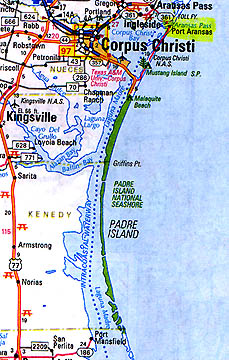
Aransas Pass at Port Aransas near Corpus Christi, Texas, is the entrance to 200 miles of white sand in the Padre Island National Seashore on Padre Island.

Updated: October 27, 2005  Redding, California - Earlier this month at 100305 Earthfiles, I reported about the lights that pretended to be stars before moving over Jackson, Michigan, on Labor Day weekend in 1967. Hundreds of people had reported that year ­ and in 1966 - unidentified flying objects in the Michigan skies. For the first time in thirty-eight years, one of those eyewitnesses named John Dotson told me about the holiday night he and his father watched over four hours as "stars" moved around in the night sky forming geometric patterns, flying apart and forming more geometric patterns.


Click here to subscribe and get instant access to read this report.

Click here to check your existing subscription status.

Existing members, login below:

Updated Part 1: Unusual Animal Deaths – 22 Horses and 1 Burro Near Calhan, Colorado

“At present I do not have any explanation for the puncture holes in the Sixkiller horses and burro.”

– John Heikkila, D.V.M., Veterinarian

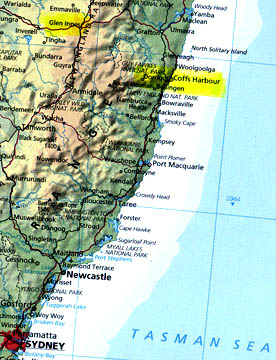
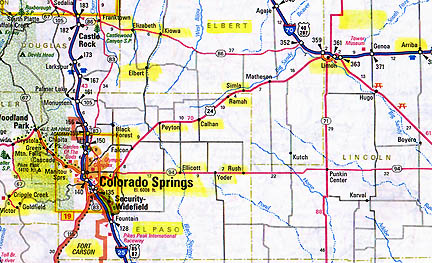
Calhan, Colorado, is on Route 24 near the center of the map. All the yellow-colored areas are sites where I have investigated unusual animal deaths since 1979.
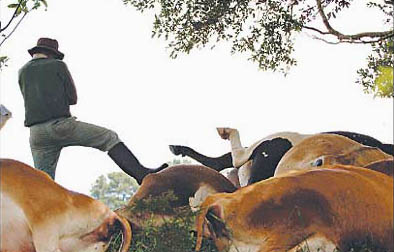
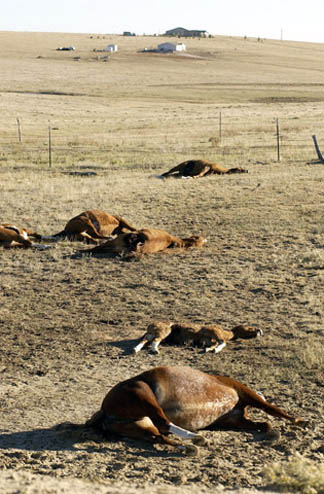
Six of sixteen horses on DeWitt ranch found dead October 22, after six horses and one burro on Sixkiller ranch found dead on October 11, 2005, all near Calhan, Colorado.  Photograph © 2005 by Chuck Bigger/The Denver Post.
Six of sixteen horses on DeWitt ranch found dead October 22, after six horses and one burro on Sixkiller ranch found dead on October 11, 2005, all near Calhan, Colorado. Photograph © 2005 by Chuck Bigger/The Denver Post.

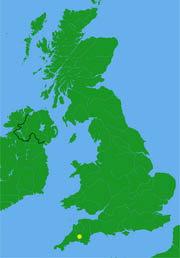
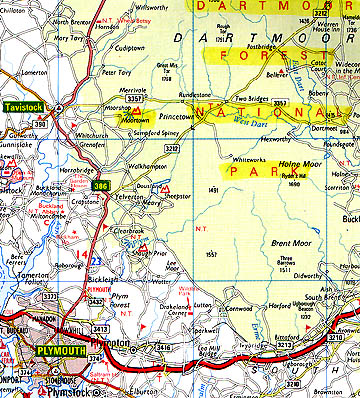
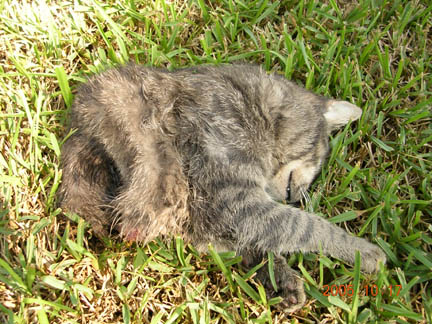
 October 27, 2005  Calhan, Colorado – Since October 11, 2005, I have received reports of unusual animal deaths in San Antonio, Texas; Dartmoor, England; and Calhan, Colorado. The San Antonio case is another bloodless half cat. In England, six sheep were found with classic mutilation excisions without blood or signs of struggle. And in Calhan, Colorado, six horses and a burro were found dead on October 11. Then, eleven days later on October 22, sixteen more horses were found dead not far from the first unusual animal deaths. Click for report.

H5N1 Bird Flu – The Next Pandemic?

“According to recent work that was published in Science two weeks ago, it’s very clear that the 1918 virus was a pure avian strain that probably mutated and directly infected humans. And it’s very similar potentially to the current avian flu.”  

Ira Longini, Ph.D., Emory University, Biostatistics

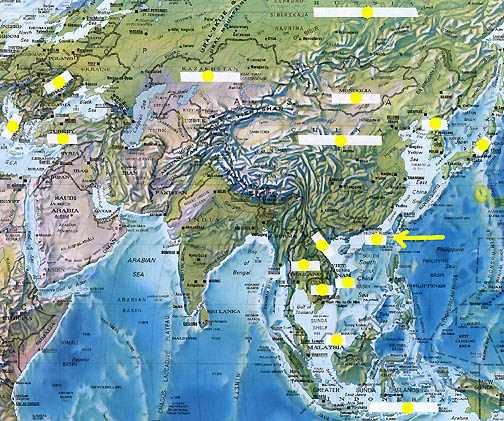
Yellow arrow points at Honk Kong, China, where the first cases of H5N1 illness and deaths in humans were reported in late 1997. Since then the H5N1 avian virus has been spread by migratory birds to at least 14 other countries. The newest cases are at the far upper left in Turkey, Romania and Greece, plus recently Croatia. Map © 2005 by Earthfiles.
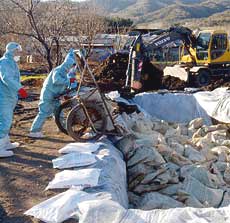
In January 2004, South Korea dumped bags of potentially bird flu-infected chickens in Yangsan. Other countries also killing birds to stop the spread of avian flu were China, Japan, Thailand, Vietnam, Cambodia, Indonesia, Pakistan, Laos and Taiwan. Photo © 2004 by AP.

Updated October 26, 2005  Atlanta, Georgia – The lethal H5N1 avian influenza virus has been making headlines nearly every day the past four weeks:Click for report.

“Throw Away Pets” – Asia’s Burmese Pythons Spreading in Everglades

“The invasion of non-local animals, such as the Asian Burmese python beginning now to populate the Florida Everglades, is one of the greatest environmental threats in the United States.”

– Steven Williams, Director, U. S. Fish and Wildlife Service

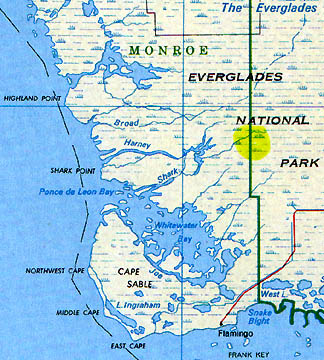
Yellow spot marks the site in the Shark Slough about 3 to 4 miles NNW of Pay-hay-okee Overlook in Everglades National Park where a partly digested 6.5-foot-long American alligator was found on September 26, 2005, hanging out of a headless, 13-foot-long Burmese python's belly.
Yellow spot marks the site in the Shark Slough about 3 to 4 miles NNW of Pay-hay-okee Overlook in Everglades National Park where a partly digested 6.5-foot-long American alligator was found on September 26, 2005, hanging out of a headless, 13-foot-long Burmese python’s belly.
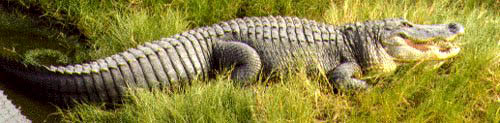
American alligators in the Everglades National Park (ENP) can grow ten to fifteen feet long. Photograph courtesy ENP.

October 21, 2005  Homestead, Florida – Until recently, the top predator in the Florida Everglades has been the American alligator. The males can grow to nearly fifteen feet long and a couple of feet wide. The females are a little smaller, around ten feet. Their long teeth and claws are lethal weapons and their jaws are like steel traps. Nothing wanted to take them on ­ until people started throwing their unwanted adult Burmese python “pet” snakes in the Everglades to get rid of the uncontrollable monsters which can grow to twenty feet long, or more. The python has a hinged jaw that allows it to swallow large prey after it has squeezed its victim to death. A small child is as vulnerable as a house cat. Click for report.

Saturn’s Icy Moon, Dione, Up Close

"Dione reveals a wonderful variety of surface features that are simultaneously familiar and unlike any other place in the solar system."

- NASA/JPL/Space Science Institute.

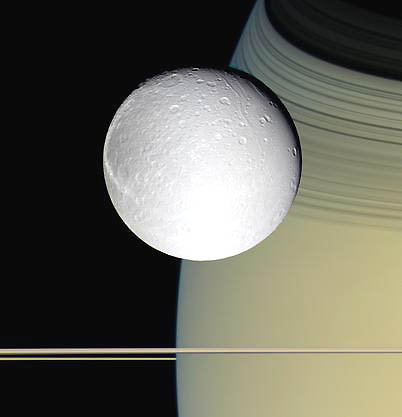
October 11, 2005, image of Saturn's icy moon, Dione, above the planet's thin rings. Behind Dione are the shadows of Saturn's B and C rings. Image from the Cassini spacecraft at 24,200 miles (39,000 kilometers) distance. Image courtesy NASA/JPL/Space Science Institute.

October 19, 2005  Pasadena, California - NASA reports that "speeding toward pale, icy Dione, Cassini's view is enriched by the tranquil gold and blue hues of Saturn in the distance. The horizontal stripes near the bottom of the image are Saturn's rings. The spacecraft was nearly in the plane of the rings when the images were taken, thinning them by perspective and masking their awesome scale. The thin, curving shadows of the C ring and part of the B ring adorn the northern latitudes visible here, a reminder of the rings' grandeur."


Click here to subscribe and get instant access to read this report.

Click here to check your existing subscription status.

Existing members, login below:

Red In Fall Leaves – Chemical Warfare?  

Left: red maple; Right: Oak. The red colors are produced by anthocyanin molecules. Research shows red maple anthocyanin can destroy other plant seeds.
Left: red maple; Right: Oak. The red colors are produced by anthocyanin molecules. Research shows red maple anthocyanin can destroy other plant seeds.

October 10, 2005  Hamilton, New York - Colgate University biology professor, Frank Frey, and graduate student, Maggie Eldridge, report new research about trees that produce red leaves, such as maples and oaks, that might be trying to destroy all other tree seeds in the area.

"Foliage changes color in autumn when chlorophyll in leaf cells (green color) breaks down and exposes the pigments that remain, such as carotenoid pigments which appear yellow or orange. But the story is different for maples and a handful of other trees whose leaves turn scarlet. The anthocyanin pigments in maple foliage are actually manufactured by the trees - rather than simply revealed - at a time of year when the organisms can't afford to use up a lot of metabolic energy for such a complex process."


Click here to subscribe and get instant access to read this report.

Click here to check your existing subscription status.

Existing members, login below: