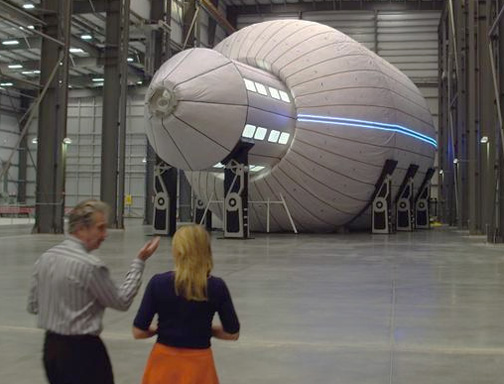
“[The alien presence] is just like right under people's noses.”
- Robert Bigelow, Founder, Bigelow Aerospace, May 28, 2017, CBS 60 Minutes

Reported and Edited by Linda Moulton Howe
Members only content (Real-X-Files or 120+ days)
“[The alien presence] is just like right under people's noses.”
- Robert Bigelow, Founder, Bigelow Aerospace, May 28, 2017, CBS 60 Minutes
“Maybe the stripes are like bands of crystals, maybe like rings of Saturn, though not far out like that.”
- Controlled Remote Viewer Ingo Swann, April 27, 1973, describing rings around Jupiter 6 years before confirmed by Voyager I
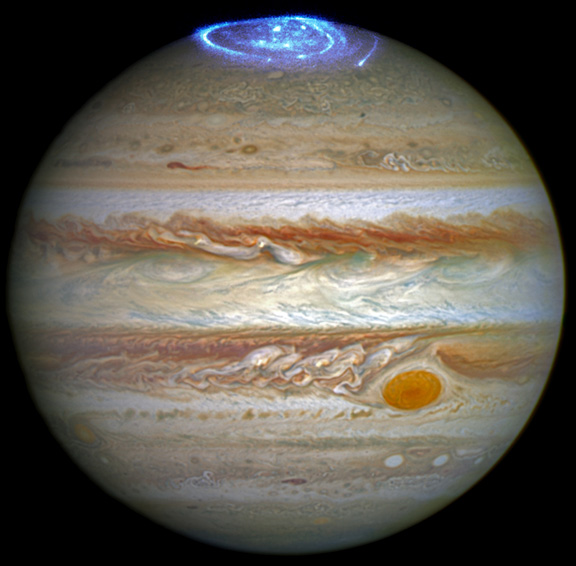
“We knew, going in, that Jupiter would throw us some curves. ...There is so much going on here that we didn’t expect that we have had to take a step back and begin to rethink of this as a whole new Jupiter.”
- Scott Bolton, Ph.D., Juno Principal Investigator, Southwest Research Inst., San Antonio, TX
“I would say the odds are even 50/50 that in a year or two, we will have discovered life elsewhere — and that's pretty big stuff!”
- Jim Al-Khalili, Ph.D., Prof. of Theoretical Physics, Univ. of Surrey, Guildford, U. K.

“It's almost at the point where there's a race to see where we will discover life elsewhere first, which is incredible!”
- Jim Al-Khalili, Ph.D., Prof. of Theoretical Physics, Univ. of Surrey, Guildford, U. K.

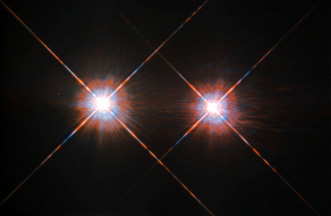
“One of the main features that distinguishes this planet from Earth is that the light from its star is mostly in the near infra-red. These frequencies of light interact much more strongly with water vapour and carbon dioxide in the atmosphere, which affects the climate that emerges in our model [of Proxima Centauri and exoplanet.]”
- James Manners, Ph.D., Astronomy & Astrophysics Journal, May 16, 2017
“No spacecraft has ever been this close to Saturn before. We could only rely on predictions, based on our experience with Saturn's other rings, of what we thought this gap between the rings and Saturn would be like. I am delighted to report that Cassini shot through the gap just as we planned and has come out the other side in excellent shape.”
- Earl Maize, Cassini Project Manager, NASA's Jet Propulsion Laboratory, Pasadena, CA
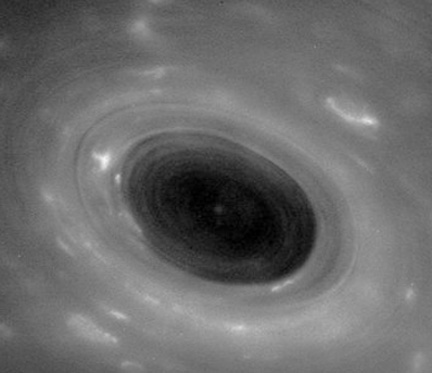
May 4, 2017 Pasadena, California - On April 26th, 2017, NASA’s Cassini spacecraft took a 70,000 miles per hour nose dive into the gap between the planet Saturn and its nearest thin ring of micron-sized dust. No Earth craft had ever flown between the innermost ring and Saturn itself.