
Our Milky Way Galaxy On Collision Course with Huge Gas Cloud – 40 Million Years from Now

“Smith's Cloud is eleven thousand light-years long, 2,500 light-years wide and is only 8,000 light-years from our Milky Way Galaxy's disk. It is moving toward our galaxy at more than 150 miles per second, aimed to strike at an angle of about 45 degrees.”

- National Radio Astronomy Observatory
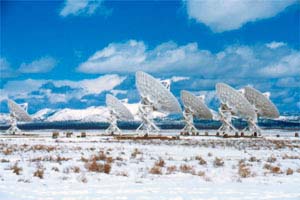
The Very Large Array (VLA) near Socorro, New Mexico. Image courtesy NRAO/Laure Wilson Neish.

January 12 , 2008  Austin, Texas  -  The National Radio Astronomy Observatory (NRAO) is a facility of the National Science Foundation, operated under cooperative agreement by Associated Universities, Inc. Its headquarters and technology center are in Charlottesville, Virginia which coordinate the research of the Green Bank Telescope (GBT) in West Virginia; the Very Large Array, Very Long Baseline Array and Expanded Very Large Array in Socorro, New Mexico; and two other instruments in Tucson, Arizona, and Santiago, Chile.

 

Click here to subscribe and get instant access to read this report.

Click here to check your existing subscription status.

Existing members, login below:

Solar Cycle 24 Has Begun

“There are a number of indicators that suggest Solar Cycle 24 Maximum
should be a big cycle.”

- David Hathaway, Ph.D., NASA

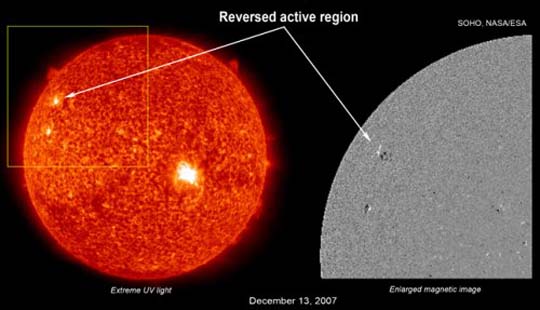
On left, is Extreme UV-wavelength image of the sun and on right, a B&W magnetogram showing positive (white) and negative (black)  magnetic polarities. On December 11, 2007, this new high-latitude active solar region was magnetically reversed from sunspot magnetic directions in the previous Solar Cycle 23. So, this new sunspot officially marks the beginning of Solar Cycle 24.  Images courtesy SOHO/NASA/ESA.

January 10, 2008  Huntsville, Alabama - One month ago on December 11, 2007, a patch of magnetism on the sun was declared by NASA to be the first official sunspot of the new Solar Cycle 24. The spot was in a high-latitude on the sun with reversed polarity from the previous Solar Cycle 23 that has been in minimum for a long time. The sun has had a blank face without any sunspots for days and weeks at a time. But from now forward to 2012, sunspots should start appearing again all over the sun, leading up to what NASA astrophysicist, David Hathaway, Ph.D., thinks will be one of the more intense solar maximums on record. Dr. Hathaway is the Solar Physics Team Leader at NASA’s Marshall Space Flight Center in Huntsville, Alabama. He received his Ph.D. in astrophysics from the University of Colorado in Boulder in 1979.


Click here to subscribe and get instant access to read this report.

Click here to check your existing subscription status.

Existing members, login below:

Part 2: Secret American Military Space Program?

The New York Times, August 7, 1989.

Return to Part 1

December 7, 2007   San Antonio, Texas -  Interview continues with Richard Sauder, Ph.D., Political Science, and Author of Underground Bases & Tunnels: What Is the Government Trying to Hide?  © 1995; Kundalini Tales © 1998; and Underwater and Underground Bases © 2001, San Antonio, Texas.

Part 1 introduced the X-20 Dyna-Soar ("Dynamic Soarer") boost/lift concept that was a United States Air Force program evolving out of Project Paperclip - the German Nazi rocket scientists brought to the United States after WWII - to develop a space plane that could be used for a variety of military missions, including reconnaissance, bombing, space rescue, satellite maintenance and sabotage of enemy satellites. Officially, the Dyna-Soar program was under the administration of the National Advisory Committee for Aeronautics (NACA) from October 24, 1957, to December 10, 1963.


Click here to subscribe and get instant access to read this report.

Click here to check your existing subscription status.

Existing members, login below:

Part 1: Secret American Military Space Program?

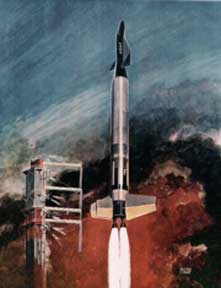
An artist's impression of X-20 Dyna-Soar being launched on top of Titan booster, an American USAF project based on work of German physicists Walter Dornberger, Wernher von Braun and Eugen Saenger. Allegedly operated only from 1957 to 1963, but is that where the American military's secret space program began, continuing to this day?

December 1, 2007   San Antonio, Texas -  On November 20th, I interviewed Armstrong Aerospace draftsman, Michael Schratt, about his research into the question: Have black budget trillions supported a secret American space program that parallels the public NASA? [ See:  112007 Earthfiles.]  Since then, I have received several supportive emails. Very valuable correspondence came from Richard Sauder, Ph.D. in Political Science, and author of three books:  Underground Bases & Tunnels: What Is the Government Trying to Hide?  © 1995; Kundalini Tales © 1998; and Underwater and Underground Bases © 2001.


Click here to subscribe and get instant access to read this report.

Click here to check your existing subscription status.

Existing members, login below:

Part 2: Glowing Disc Encounter with Military in Albuquerque, NM

Return to Part 1

November 29, 2007   Albuquerque, New Mexico -

Paul D. McKeever, in August 1984 at age 18, was accepted into U. S. Army Reserves at Ft. Leonard Wood, Company D44, Missouri.

Ten years after the Sandia hills event, Paul McKeever at age 18 enlisted in the U. S. Army Reserves in August 1984. He is pictured here on far left. Paul was sent for basic training at Ft. Leonard Wood in Missouri where he trained with Company Delta 44  (Battalion 4, Brigade 4).


Click here to subscribe and get instant access to read this report.

Click here to check your existing subscription status.

Existing members, login below:

Gas Eruptions from Comet Holmes?

“Comet Holmes flared up from a magnitude 17 to magnitude 2 in just 24 hours from October 24 to 25, 2007.”

- Charlie Kiesel, Amateur Astronomer

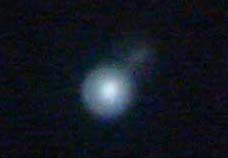
Cropped close-up of DSC03081 at 9:59:38 PM, Sunday, October 28, 2007 © by Charlie Kiesel.

October 31, 2007  Fort Branch, Indiana - Today I received the following email from amateur astronomer Charlie Kiesel who lives in Fort Branch, Indiana. He has sent the images of Comet Holmes seeming to erupt in two of 28 images Charlie photographed on Sunday night, October 28, 2007, at 9:59:38 PM CDT and 10:06:51 PM CDT. Charlie has sent the "erupting" images to Spaceweather.com and other NASA comet websites for comment. He told me, "Comet Holmes flared up from a magnitude 17 to magnitude 2 in just 24 hours from October 24 to 25, 2007."


Click here to subscribe and get instant access to read this report.

Click here to check your existing subscription status.

Existing members, login below:

Earlier, Faster and Deeper Arctic Ice Melt Down

“As longtime Arctic residents, they told me they had never seen
open water so early before - which was late May 2007.”

- Scott Lamoureux, Ph.D., Queen's University

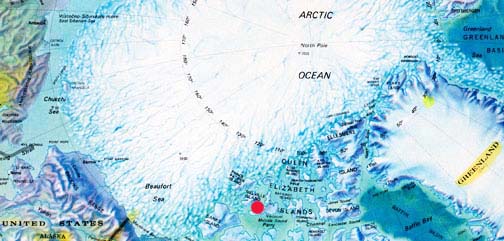
Red circle marks Melville Island between Alaska and Greenland near the Arctic Circle, the site of ice melt studies between 2002 and 2005 by Queen's University geography team.
 August 2007, Arctic Ocean, open water and ice seen from an icebreaker research vessel. Image by Andy Armstrong, National Oceanic and Atmospheric Administration (NOAA).
August 2007, Arctic Ocean, open water and ice seen from an icebreaker research vessel. Image by Andy Armstrong, National Oceanic and Atmospheric Administration (NOAA).

October 5 , 2007  Kingston, Ontario , Canada - The United Nations International Panel on Climate Change (IPCC) has had to revise upward its estimates of possible temperature increases over this century. Now, the numbers say that in another 90 years, Earth could be as much as 11 degrees F. warmer than it was at the beginning of the 21st Century. Compare 11 degrees F. to only a 1 degree F. increase in the entire 20th century!


Click here to subscribe and get instant access to read this report.

Click here to check your existing subscription status.

Existing members, login below:

070707 East Field Wheat Formation: Lab Analysis

“I’ve never seen this bimodal germination bimodal before. This is totally anomalous. ...These two entirely different populations of growth rates in these East Field seed samples indicates that there were two entirely different types of energy that hit the field at pretty much the same time.”

- W. C. Levengood, Biophysicist

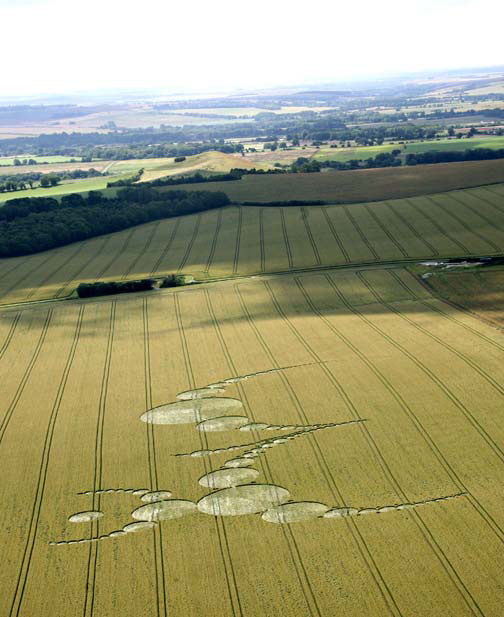
 Massive pattern of circles in East Field, Alton Priors, Wiltshire, U. K. wheat, estimated to cover 96,600 square feet, or 2.25 acres, with 150 circles in a very strange design spread across 1,033 feet and 490 feet wide. Aerial images © 2007 by Lucy Pringle.  Also see:  Cropcircleconnector.com.
Massive pattern of circles in East Field, Alton Priors, Wiltshire, U. K. wheat, estimated to cover 96,600 square feet, or 2.25 acres, with 150 circles in a very strange design spread across 1,033 feet and 490 feet wide. Aerial images © 2007 by Lucy Pringle.  Also see:  Cropcircleconnector.com.


October 4, 2007  Grass Lake, Michigan - The most extraordinary crop formation of 2007 was discovered on Saturday, July 7th, around 3:20 AM in the East Field of Wiltshire, England, by three people on a night watch. One was researcher and photographer, Winston Keech, who had video cameras aimed at the East Field, capable of night vision and infrared. The other two eyewitnesses were Gary King and his friend, Paula Presdee-Jones, from Cardiff, Wales. Back in July, I interviewed Gary King about the fact that at approximately 3:08 AM, all three saw a great flash of bright light over the East Field. One of Winston Keech’s infra red cameras also captured the flash before the ran camera out of videotape. See 071907 Earthfiles.


Click here to subscribe and get instant access to read this report.

Click here to check your existing subscription status.

Existing members, login below:

Meteorite Fell in Carancas, Peru – Not Satellite

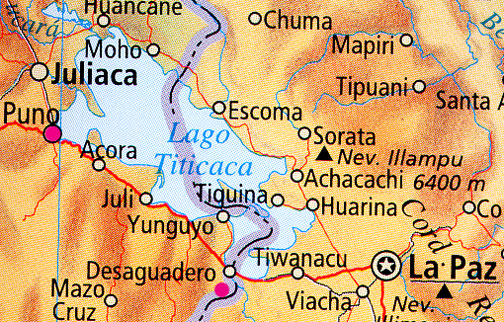
Not far from Lake Titicaca and Puno in southern Peru, is the small farming town of Carancas on a high Andean plateau near the Bolivian border (pink circle below Desaguadero).
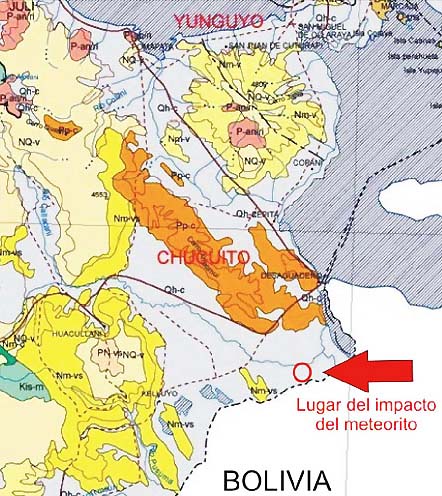
Red circle and arrow identify meteorite impact crater site in Carancas, Peru, south of Yunguyo at the southern end of Lake Titicaca. Map created by Jose Machare, Ingemmet.
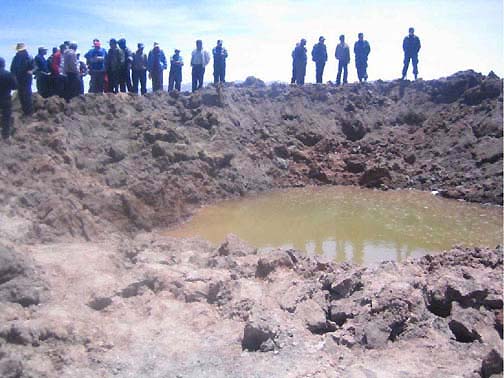
Meteorite crater filled with ground water after 11:34 AM impact on September 15, 2007, in Carancas, Peru, south of Lake Titicaca near Bolivian border. Hole diameter measured between 7.4 to 7.8 meters (26 feet). Ring boundary of ejecta around hole measured between 13.3 to 13.8 meters in diameter. Crater depth to groundwater estimated about 2 meters.

September 26, 2007  Lima, Peru - It was 11:45 AM on Saturday, September 15, 2007, when alpaca farmer, Justina Limache, heard a “thunderous roar from the sky.” Scared, she grabbed her 8-year-old granddaughter and ran into her house. For the next few minutes, Justina heard rocks raining down on the roof so loudly that she worried her house would collapse. What 74-year-old Justina Limache did not know was that a meteorite had fallen near her Carancas, Peru, home 62 miles (100 kilometers) southeast of Puno and not far from Lake Titicaca. Carancas is a farm community of about 2,000 people who raise cows, alpacas, llamas and other animals on the high Andean plateau near the Bolivian border.


Click here to subscribe and get instant access to read this report.

Click here to check your existing subscription status.

Existing members, login below:

EARTHFILES