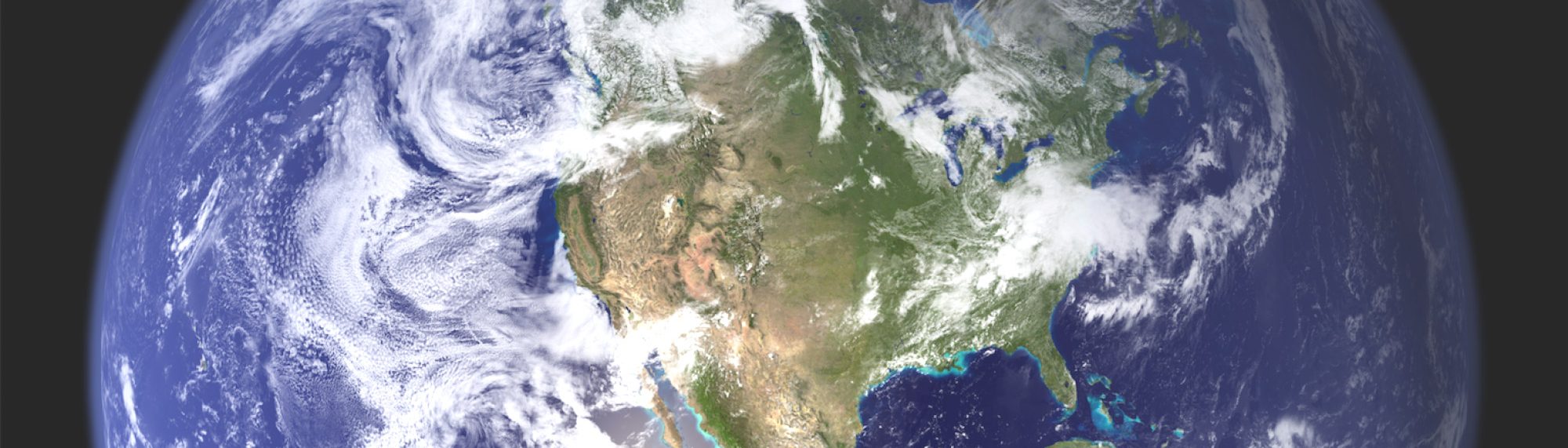
April 22, 2012 Sacramento, California - Channel 10, ABC-TV, in Sacramento, California, reported a big, ground-shaking boom this morning around 8 AM Pacific from residents in El Dorado, Amador, Calaveras, Tuolumne, and San Joaquin counties.
Click here to subscribe and get instant access to read this report.
Click here to check your existing subscription status.
Reprint April 18, 2012 / May 26, 2011 Milton, Florida, and Baton Rouge, Louisiana - A year ago on April 20, 2010, the BP Deepwater Horizon oil rig blew up killing 11 workers on the platform. Nearly a mile below the rig, the Macondo well erupted. Between that day and four months later at the end of July 2010, at least 206,000,000 gallons of crude oil gushed uncontrollably into the Gulf of Mexico, while 770,000 gallons of Corexit were pumped and sprayed into the Gulf to allegedly “disperse” BP's massive oil slick.
Click here to subscribe and get instant access to read this report.
Click here to check your existing subscription status.
“The captain with Northwest Florida University asked (over the VHF marine radio) for captains - who worked in the oil clean up and are coughing up blood, blowing blood out of their nose, and have skin rashes - not to speak to the media till after fishing season. No one wants to be responsible for scaring away tourist dollars.”
- Gulf Fisherman, Destin, Florida
Click here to subscribe and get instant access to read this report.
Click here to check your existing subscription status.
“The captain with Northwest Florida University asked (over the VHF marine radio) for captains - who worked in the oil clean up and are coughing up blood, blowing blood out of their nose, and have skin rashes - not to speak to the media till after fishing season. No one wants to be responsible for scaring away tourist dollars.”
- Gulf Fisherman, Destin, Florida
Subject: Sick fish in Gulf of Mexico
Date: May 29, 2011 7:13:58 PM MDT
To: Linda Moulton Howe <[email protected]>
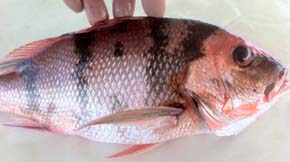
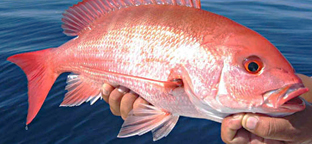
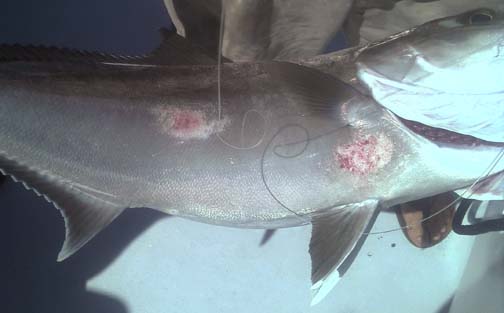
“I run a deep sea fishing business in Destin, Fl. I have been professionally fishing the Gulf since 1998. I'm 42 and grew up fishing the Gulf. I came across your Earthfiles website while searching for info on the sick fish in the Gulf. I have been catching sick fish with lesions. Before now, I have caught tens of thousands of fish and have never thrown one back because of skin lesions.
I took the attached photo on today's fishing trip. This is the first fish of the trip (Amberjack.) We caught 5 more AJ's all with lesions. NOAA is stating a one in 1500 chance of catching a sick fish. Today May 29, my catch ratio was 100% sick fish. My last trip Fri. May 27 we caught 8 AJ's, 5 with lesions.
Sick Amberjack with lesions caught by Gulf fisherman off Destin, Florida, on May 29, 2011. Five more Amberjacks caught with this one all had lesions. Image provided by Destin fisherman.
Click here to subscribe and get instant access to read this report.
Click here to check your existing subscription status.
“If it turns out booms are coming from a mile or two deep,
yeah, it's small earthquakes. But if the cause is determined to be
only about 100 feet deep, then something else is happening.”
- Clifford Thurber, Ph.D., Geophysicist, Univ. of Wisconsin-Madison
April 7, 2012 Washington, D. C. - A United States Geological Survey (USGS) research team headed by USGS geophysicist William Ellsworth, will be presenting their data at an upcoming Seismological Society of America meeting in San Diego, California, April 17 - 19. The presentations entitled, “Are Seismicity Rate Changes in the Midcontinent Natural or Manmade?”
Click here to subscribe and get instant access to read this report.
Click here to check your existing subscription status.
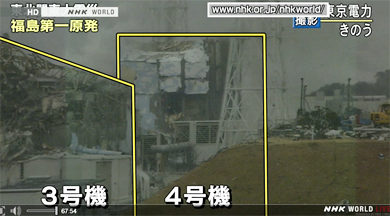
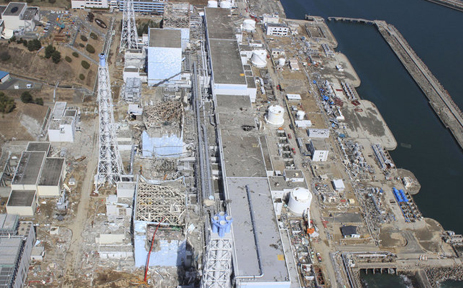
At Fukushima, the amount of long-lived, highly radioactive Cesium-137 is about 134 million curies — roughly 85 times the amount of Cs-137 released at the Chernobyl accident, as estimated by the U.S. National Council on Radiation Protection (NCRP).
“If an earthquake or other event were to cause this Unit 4 pool to drain, this could result in a catastrophic radiological fire involving nearly 10 times the amount of Cs-137 released by the Chernobyl accident.”
- Robert Alvarez, Senior Scholar, Inst. for Policy Studies
April 8, 2012 Fukushima, Japan - Japan’s former Ambassador to Switzerland, Mr. Mitsuhei Murata, was invited to speak about the Fukushima nuclear power plant disaster at a public hearing of the Budgetary Committee of the House of Councilors on March 22, 2012.
Click here to subscribe and get instant access to read this report.
Click here to check your existing subscription status.
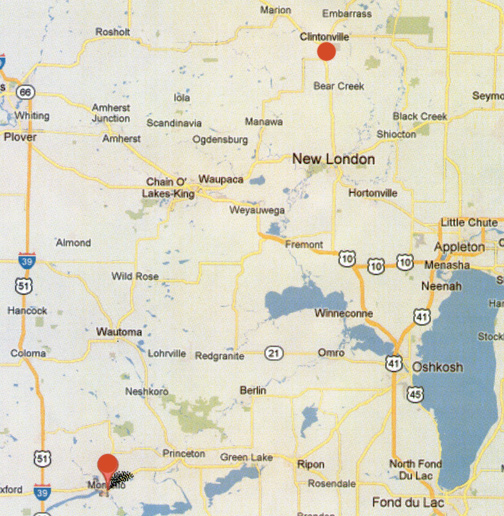
“Boom reports in Montello have been pretty much community wide.
We've checked with our typical sources such as utility companies and anybody maybe drilling or doing construction in the area and at this point in time we don't know what it is.”
- Richard Olson, Police Chief of Montello, Wisconsin
“Clearly it simply jolts you. It sounds like someone drops a piece of dynamite outside of the building you’re in. Or that something sort of exploded under the ground. ...We have checked gas lines, sewers, water pressures and consulted with meteorologists, seismologists, U. S. military, utilities experts and mining companies, but have come up empty-handed.”
- Lisa Kuss, City Administrator, Clintonville, WI
Beginning at 5:30 PM Central on Tuesday, March 20, 2012, in Montello, Wisconsin, about 80 miles southwest of Clintonville, residents called police about loud booms shaking their houses and rattling windows. University of Wisconsin-Madison Seismologist Harold Tobin said he was not aware of any seismic readings or reports near Montello.
Click here to subscribe and get instant access to read this report.
Click here to check your existing subscription status.
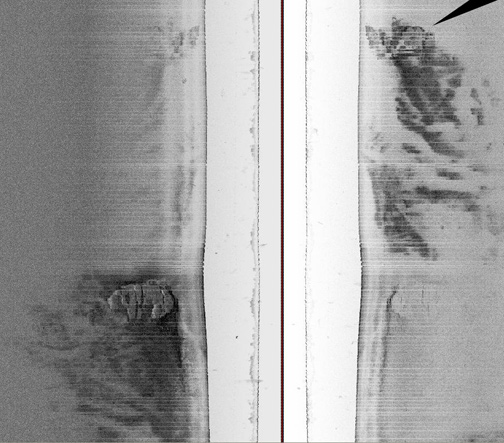
“In mid-May 2012, we are preparing an expedition with more sophisticated sonars, cameras and other equipment to hopefully determine what these strange objects are and if it is safe to try a dive to them.”
- Peter Lindberg, Co-Owner, Ocean Explorer, Stockholm, Sweden
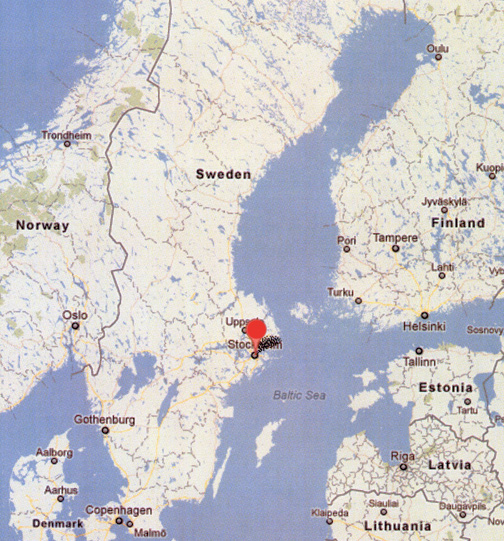
March 30, 2012 Stockholm, Sweden - The Baltic Sea is a good preservative. The salt content is low and there are no wood-burrowing organisms. Andreas Olsson, Head of Archaeology at the Swedish Maritime Museum, estimates there could be 20,000 ship wrecks on the Baltic Sea floor. “It's like a ship wreck laboratory - the best in the world” where the cold, dark water has preserved sunken objects for centuries.
Click here to subscribe and get instant access to read this report.
Click here to check your existing subscription status.
“Early Saturday morning on March 17th, 2012, at 5:42 a.m., I was awakened by a single, very intense explosion. The concussion shook the building and was not accompanied by any other sound. Just one explosion that came from out of nowhere and then silence.”
March 30, 2012 Albuquerque, New Mexico - Since February 2012, Earthfiles has received an increasing number of loud, jolting boom reports from all over North America - and one report from Latvia. So, the March 18 to March 28, 2012, persistent booms in Clintonville, Wisconsin, are part of a larger pattern that are not explained by the March 20, 2012, small 1.5 magnitude quake that USGS recorded in the vicinity of Clintonville.
Click here to subscribe and get instant access to read this report.
Click here to check your existing subscription status.