




Click here to subscribe and get instant access to read this report.
Click here to check your existing subscription status.
Existing members, login below:
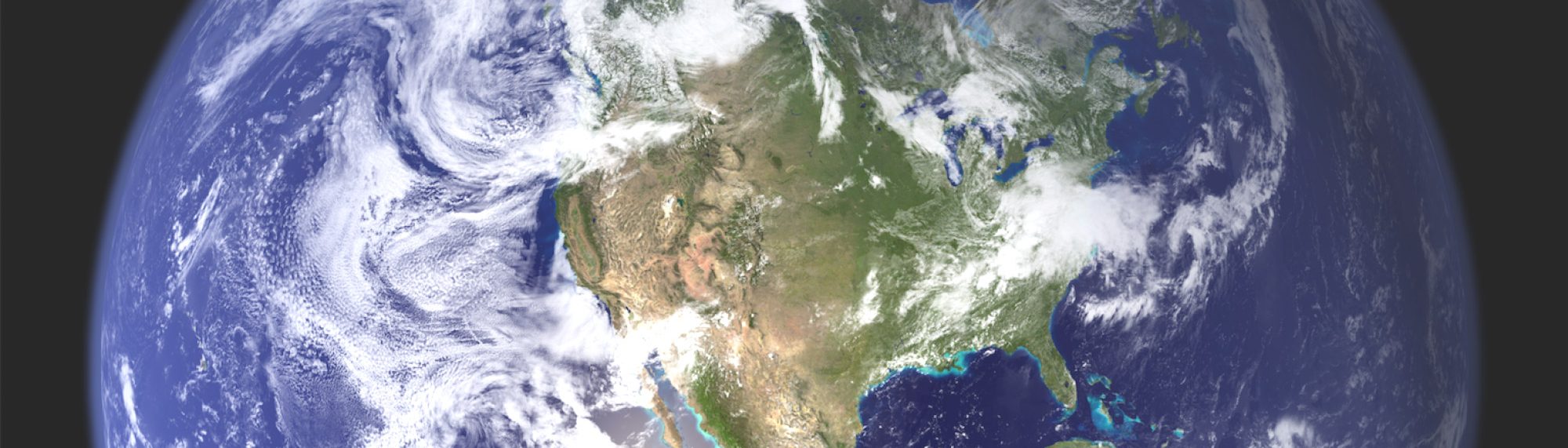
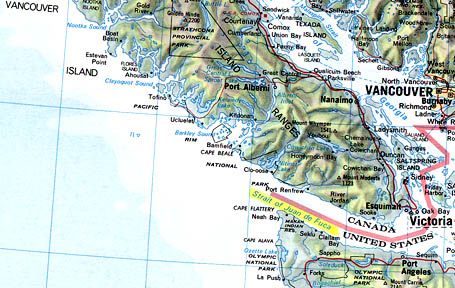
March 10, 2005 Newport, Oregon – An abnormally large number of small earthquakes swarmed in the Juan de Fuca region off Vancouver Island, British Columbia, Canada, between February and March 4. Then on March 8, 2005, Mount St. Helens released a 30,000-foot-high plume of gas and ash. Offshore, U. S. Navy hydrophones picked up at least 4,000 low magnitude rumblings over six days, which provoked university and NOAA scientists to recently dive down to the sea floor to check out what was happening. Of all the seismic regions off shore around the continental United States, the Juan de Fuca ridge is one that could have a subduction event in which plates violently slide over each other as they did in the huge December Indonesian event. If that did happen in Juan de Fuca, there could be a very large tsunami as well.Click for report.
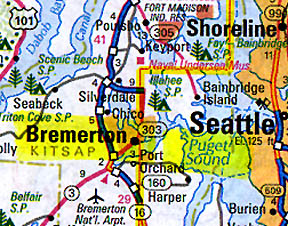
March 7, 2005 Shelton, Washington - Jim Strong's interest in unidentified flying objects began during his U. S. Air Force work from February 1964 to February 1968. He was trained at Keesler Technical Training Center in Biloxi, Mississippi, in advanced electronics and radar. Then he was stationed with the 757 Radar Squadron at Blaine AFB on the Canadian border. Once there, Jim was assigned to the Search Radar unit. [Editor's Note: In search radar, the antenna goes around in a circle and picks off the azimuth, or direction, of aircraft. In height finder radar, the antenna nods up and down.]
"I do believe there is life inside the planet Mars, maybe 50 to 100 meters below the surface. But there is a long way to go to demonstrate that."
- Physicist Vittorio Formisano, Principal Investigator, PSF Mars Orbiter
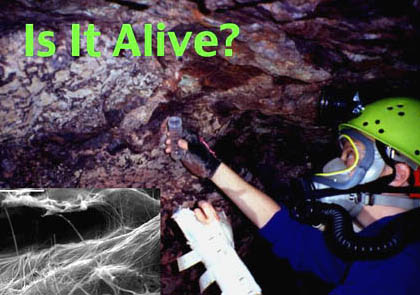
March 4, 2005 Socorro, New Mexico - Last week at the first European Space Agency Mars Express Orbiter conference in The Netherlands, the Italian physicist Vittorio Formisano presented data about not only methane and water vapor in the Martian atmosphere, but formaldehyde. Small amounts of formaldehyde had also been reported by NASA and attributed to the oxidation and break down of methane.
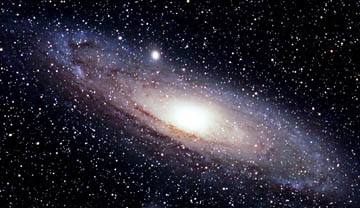
March 3, 2005 Sweet Briar, Virginia- The current British journal, Nature, features a report about a powerful and repeating burst of radio waves toward the center of our Milky Way galaxy that are unlike any other radio bursts ever monitored on Earth. The unique event took place the night of September 30 to October 1, 2002. It has taken three years for the data to be thoroughly analyzed, compared to archive data, and finally reported publicly as a unique and puzzling event in human study of our universe. The lead scientist on the Nature article is Scott Hyman, Professor of Physics at Sweet Briar College in Virginia, who for five years has been studying the Milky Way's galactic center for the Naval Research Laboratory.
"I don't know of anyone who has access to the (Pentagon) blue room, nor am I aware of its contents and I am not aware of anything having been relocated. ...this thing (UFOs) has gotten so highly classified, even though I will admit there is a lot of it that has been released, it is just impossible to get anything on it."
- Barry Goldwater, U. S. Senator, Arizona, 1981
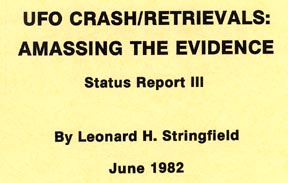
To be more computer-friendly, the reprint has been divided into parts. Here begins Part 1 of Status Report III, written in June 1982. The series of status reports, I through VII, were written by Leonard H. Stringfield from 1978 to 1994. Previous Status Report IV begins at Earthfiles 021205. Leonard Stringfield died on December 18, 1994.
"PROLOGUE: THE BIGGEST STORY EVER, NEVER TOLD
"Ever since World War II when the first UFOs, dubbed 'foo fighters,' became officially recognized, the mystery of their origin and intent has haunted the minds of man. Most ponder the puzzlement skeptically amused; others want to believe and straddle a philosophic fence guessing for answers. As we head into the decade of the 1980s, serious research has not found the answer either, or the proof to qualify an answer. Officially, the mystery remains ostensibly irresolvable. To those wary and who have taken the time to probe, the official position is as mysterious as the UFO itself.
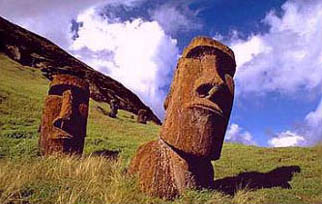
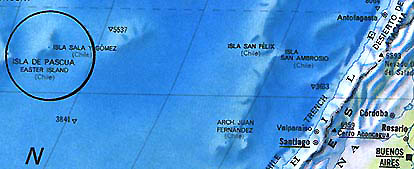
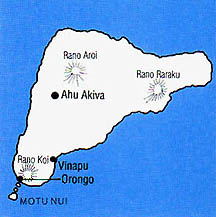
February 26, 2005 Los Angeles, California – Among earth mysteries, some of the greatest are the haunting remains of past civilizations such as the Mayan pyramids of Mexico and Central America; the elaborate, deserted temples of Angkor Wat in Cambodia; and the huge and heavy stone statues on remote Easter Island, 2300 miles west of Chile’ in South America. The island and its strange statues were not discovered until Easter Day on April 5, 1722 by a Dutch explorer named Jacob Roggeveen. Like all subsequent visitors, Roggeveen was puzzled about how the natives there had erected the large lava rock statues, one as tall as 39 feet. And why?Click for report.
"The rocks in the Columbia Hills they've seen a lot of water! They've been soaked, they've been altered, there is all sort of evidence that it was a different Mars when those rocks were laid down."
- Larry Crumpler, Ph.D., Geologist
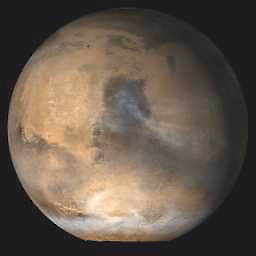
February 25, 2005 Albuquerque, New Mexico - There was a discovery by the Spirit Rover on Mars which thrilled NASA scientists in the summer of 2004. Both rovers, Spirit and Opportunity, have been looking for hard geological evidence that Mars had a watery past. Spirit's discovery would hold up in a "court room" as solid evidence of water, one geologist told me. And if there was once a lot of water on the Martian surface, was there life in that water? If organisms did live in Martian water, could they still be frozen in surface ice - or even living today underground and in caves on Mars? Could living organisms explain methane, formaldehyde and water vapor reported in the Martian atmosphere?