World’s First Macro-Sized Quantum Machine

“If somebody can build a quantum computer with all that it promises to be, prime number decryption could then occur in real time and that would mean all of the encryption that’s used by banks, governments and the military would be crackable.”

- Andrew Cleland, Ph.D., Physicist, UC-Santa Barbara

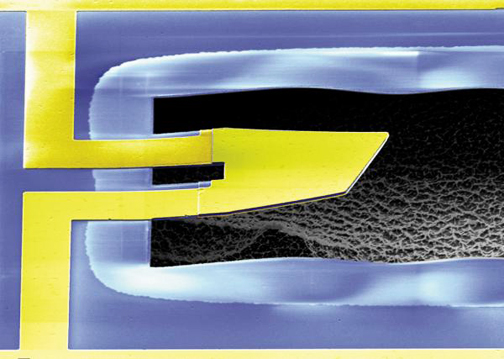
Science journal's Breakthrough of 2010 went to the first mechanical, vibrating device (resonator), which is as long as a human hair is wide. The paddle-shaped resonator is made of a thin film of aluminum nitride sandwiched between aluminum layers. The device is the first to reach the quantum ground state, a feat achieved by physicists at the University of California - Santa Barbara, led by Andrew N. Cleland, Prof. of Physics, Cleland Group, UC-Santa Barbara. Scanning electron microscope image 2010 by Andrew N. Cleland and Aaron D. O'Connell.

April 1, 2011  Santa Barbara, California - Until 2010, “all  human-made objects have moved according to the laws of classical mechanics. Back in March 2010, however, a group of researchers designed a gadget that moves in ways that can only be described by quantum mechanics.”  Thus began the American Association of the Advancement of Science announcement that its choice for Science Breakthrough of 2010 goes to the first quantum machine big enough to actually see with the human eye in the macro world. It's length is about the width of a human hair (image above).


Click here to subscribe and get instant access to read this report.

Click here to check your existing subscription status.

Existing members, login below:

Will 2013 Solar Max Be Half the Size of Solar Cycle 23?

“This Solar Cycle 24 at best is going to be half as big as Cycle 23!”

- David Hathaway, Ph.D., NASA Solar Physicist

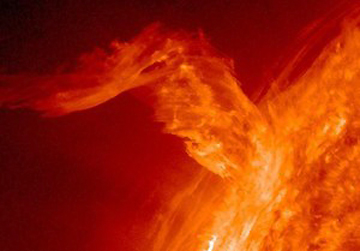
Huge, twisting coronal mass ejection (CME) erupting thousands of miles into space. If powerful CME's unleash a path of solar particles headed straight for Earth, then satellites, communications, air traffic and power grids can be affected - even brought down. How big will Solar Cycle 24's Maximum be in 2013? Image by SOHO.

April 1, 2011  Huntsville, Alabama - In the March 3, 2011, issue of the journal Nature, astrophysicist Dibyendu Nandy from the Indian Institute of Science Education and Research in Kolkata, published his theory about why there was such a long, spotless Solar Cycle 23 minimum that broke a century of records. Dr. Nandy built a computer simulation in which “the fast meridional flow in the first half of a solar cycle, followed by a slower flow in the econd half, leads to a deep sunspot minimum, effectively reproducing the Cycle 23 minimum the sun underwent.”


Click here to subscribe and get instant access to read this report.

Click here to check your existing subscription status.

Existing members, login below:

Part 4:  “Falling Squares of Light” in Levittown, PA – Scientific Research

“This seems to be physical evidence of very thin energy beams
only 1/10th of a millimeter wide, probably of a microwave nature,
that caused these straight line lesions in the leaves. ... I’ve never seen
anything like this before.”

- Biophysicist W. C. Levengood

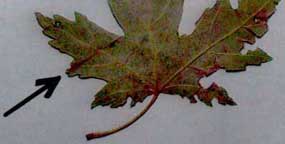
Arrow points to unusual reddish, thin, straight line on one of the sampled silver maple leaves exposed to the Levittown aerial object's glittery light energy. Image © 2008 by W. C. Levengood.
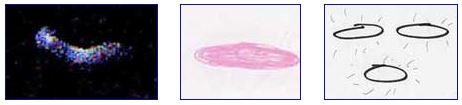
Left: “Boomerang” version of mysterious aerial object that morphed into middle pink-colored disc. Right: The pink disc then flashed three oval, white lights on its bottom surface and “little squares of light” dropped like snow onto apartment yard and privet bush. Half a dozen sightings April through July 2008, Levittown, Pennsylvania. Image and drawings by resident and eyewitness.
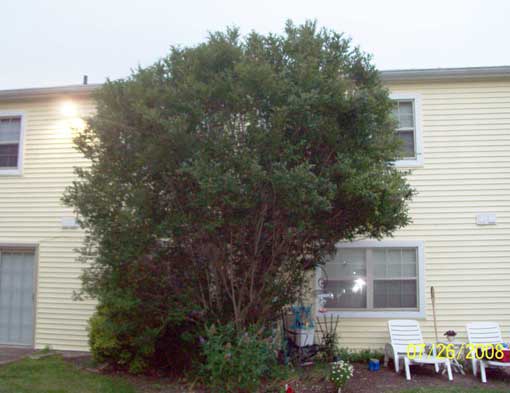
Privet bush about 15 feet high grows next to eyewitness's apartment back door in Levittown, Pennsylvania, where “little squares of light” first fell on June 12, 2008 - and two more times in July 2008 - from a pink-colored aerial disc and surrounded the privet bush and a silver maple tree about 65 feet away. Image © 2008 by Robert Gardner.

Return to Part 1

Return to Part 2

Return to Part 3

April 1, 2011 reprint of November 17, 2008  Grass Lake, Michigan - The biophysical and biochemical research by biophysicist W. C. Levengood continues with this laboratory report about somatic leaf growth anomalies in privet bush leaves exposed to energy dispersed from unidentified aerial craft over Levittown, Pennsylvania, apartment three times on June 12, July 10 and July 16, 2008.


Click here to subscribe and get instant access to read this report.

Click here to check your existing subscription status.

Existing members, login below:

Part 2:  “Falling Squares of Light” in Levittown, PA – Scientific Research

“The red-brown color observed and photographed in the Levittown leaves implies that the June and July leaves, filled with green chlorophyll, were subjected to external radiation - presumably the beamed energy from the aerial craft - that provoked leaf production of the red, protective pigment anthocyanin usually associated with fall leaves, not summer growth.”

- Biophysicist W. C. Levengood
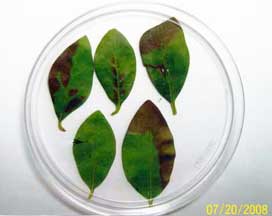
Summer privet leaves with abnormal red-brown discoloration associated normally with fall production of the pigment anthocyanin. Hypothesis is that unusual external energies associated with the Levittown aerial phenomenon provoked premature anthocyanin production. Image © 2008 by W. C. Levengood, Pinelandia Biophysical Lab.
Left:  “Boomerang” version of mysterious aerial object that morphed into middle  pink-colored disc. Right: The pink disc then flashed three oval, white lights on its bottom  surface and “little squares of light” dropped like snow onto apartment yard and privet bush. Half a dozen sightings April through July 2008, Levittown, Pennsylvania.  Image and drawings by resident and eyewitness.
Left: “Boomerang” version of mysterious aerial object that morphed into middle pink-colored disc. Right: The pink disc then flashed three oval, white lights on its bottom surface and “little squares of light” dropped like snow onto apartment yard and privet bush. Half a dozen sightings April through July 2008, Levittown, Pennsylvania. Image and drawings by resident and eyewitness.   

Privet bush about 15 feet high grows next to eyewitness's apartment back door in Levittown, Pennsylvania, where “little squares of light” first fell on June 12, 2008 - and two more times in July 2008 - from a pink-colored aerial disc and surrounded the privet bush and a silver maple tree about 65 feet away. Image © 2008 by Robert Gardner.Privet bush about 15 feet high grows next to eyewitness's apartment back door in Levittown, Pennsylvania, where “little squares of light” first fell on June 12, 2008 - and two more times in July 2008 - from a pink-colored aerial disc and surrounded the privet bush and a silver maple tree about 65 feet away. Image © 2008 by Robert Gardner.Return to Part 1

April 1, 2011 reprint of November 14, 2008  Grass Lake, Michigan - W. C. Levengood, a biophysicist who worked on his Ph.D. at the University of Michigan, has received several patents concerning seed development. His research work about evidence of spinning plasma vortices containing microwave and other energies affecting plants and grasses in the global crop circle phenomenon has been published in the prominent journal, Physiologia Plantarum: An International Journal for Plant Biology.


Click here to subscribe and get instant access to read this report.

Click here to check your existing subscription status.

Existing members, login below:

Part 3:  “Falling Squares of Light” in Levittown, PA – Scientific Research

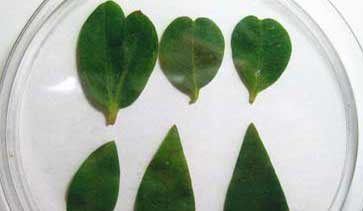
After exposure to the aerial object's glittering light energy,
there were “respiration-related increases in the internal energy
of the privet leaves 17 times normal and 15 times normal
in the silver maple leaves.”

- Biophysicist W. C. Levengood Lab Report
 

Left: “Boomerang” version of mysterious aerial object that morphed into middle pink-colored disc. Right: The pink disc then flashed three oval, white lights on its bottom surface and “little squares of light” dropped like snow onto apartment yard and privet bush. Half a dozen sightings April through July 2008, Levittown, Pennsylvania. Image and drawings by resident and eyewitness.
 Privet bush about 15 feet high grows next to eyewitness's apartment back door in Levittown, Pennsylvania, where “little squares of light” first fell on June 12, 2008 - and two more times in July 2008 - from a pink-colored aerial disc and surrounded the privet bush and a silver maple tree about 65 feet away. Image © 2008 by Robert Gardner.
Privet bush about 15 feet high grows next to eyewitness's apartment back door in Levittown, Pennsylvania, where “little squares of light” first fell on June 12, 2008 - and two more times in July 2008 - from a pink-colored aerial disc and surrounded the privet bush and a silver maple tree about 65 feet away. Image © 2008 by Robert Gardner.


Return to Part 1

Return to Part 2

April 1, 2011 reprint of November 17, 2008  Grass Lake, Michigan - The biophysical and biochemical research by biophysicist W. C. Levengood continues with this laboratory report about somatic leaf growth anomalies in privet bush leaves exposed to energy dispersed from unidentified aerial craft over Levittown, Pennsylvania, apartment three times on June 12, July 10 and July 16, 2008.


Click here to subscribe and get instant access to read this report.

Click here to check your existing subscription status.

Existing members, login below:

Beyond Carbon-Based Life Forms – How Different Could E. T. Be?

“We describe a bacterium, strain GFAJ-1 of the Halomonadaceae family, isolated from Mono Lake, California, which substitutes arsenic for phosphorus to sustain its growth. Our data show evidence for arsenate in macromolecules that normally contain phosphate, most notably nucleic acids and proteins. Exchange of one of the major bioelements may have profound evolutionary and geochemical significance.”

- Felisa Wolfe-Simon, Ph.D., Biochemist, USGS; NASA Astrobiology Institute
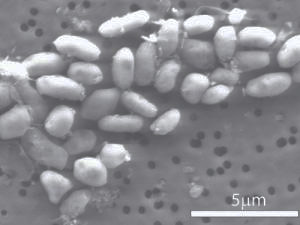
 

GFAJ-1 is a bacteria that can live without phosphorus, replacing it with arsenic. Photomicrograph source Science/AACS.
Researchers working in the harsh, arsenic-rich environment of Mono Lake, California, have discovered arsenic-eating bacteria called GFAJ-1 able to thrive and reproduce using arsenic, changing the fundamental knowledge about what comprises all known life on Earth. Mono Lake's large amount of toxic arsenic and very little phosphorus should kill Earth microorganisms, not make them thrive. But the GFAJ-1 bacteria grows and reproduces on an arsenic-rich diet and even has arsenic encoded in its DNA genome where phosphorus would normally be encoded. That means the GFAJ-1 organism in Mono Lake is radically different than other known Earth life.

Updated  December 3, 2010  Washington, D. C.  - Today NASA held a much-awaited astrobiology press conference at its headquarters in Washington, D. C.  But instead of announcing that Mars has bacteria or watery moon Europa has marine life, the scientists reported finding an Earth-based bacteria called “GFAJ-1”  of the Halomonadaceae family in Mono Lake, California, that thrives on arsenic that would ordinarily poison and kill any multicellular life on this planet. In fact, arsenic is used to produce pesticides, herbicides and insecticides because it is so toxic. This is the first form of life known to be capable of growth in environments with little or no phosphorus.


Click here to subscribe and get instant access to read this report.

Click here to check your existing subscription status.

Existing members, login below:

Dead Sea Scrolls Going Online

“We are establishing a milestone connection between progress and the past to preserve this unique heritage for future generations. At the end of a comprehensive and profound examination, we have succeeded in recruiting the best minds and technological means to preserve this unrivaled cultural heritage treasure which belongs to all of us, so that the public with a click of the mouse will be able to freely access history in its fullest glamour.”

- Shuka Dorfman, Director, Israel Antiquities Authority
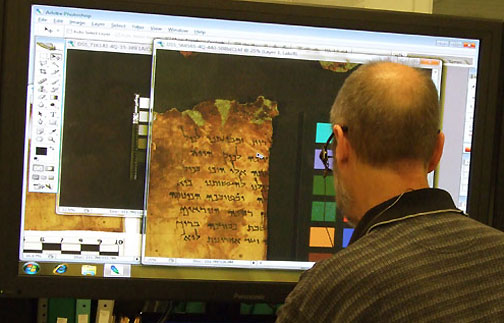
 

Scholar working with Dead Sea Scroll images on computer.  The Israel Antiquities Authority is collaborating with the Google R&D center in Israel to upload all 30,000 Dead Sea Scrolls fragments, as well as additional data that will allow users to perform searches across a broad range of data in a number of languages and formats. Image 2010 courtesy Israel Antiquities Authority.

October 21, 2010  Jerusalem, Israel - The entire collection of 900 Dead Sea Scroll manuscripts made from 30,000 Dead Sea Scroll fragments are being digitally photographed by the Israel Antiquities Authority and Google's Research and Development center in Israel to put the entire historic writings online. According to the Antiquities Authority, the digital Dead Sea Scrolls will be equal in quality to actually viewing them in person.

NASA space age multi-spectral imaging technology will be used to produce high-resolution images of the sometimes-faded texts that may reveal new letters and words. The estimated cost of $3.5-million will be funded by the Israel Antiquities Authority and Google R&D's division in Israel. The entire Dead Sea Scroll collection will be made available online free of charge online in a searchable database complemented by translations. The first images could go online in the next few months, with the project completed within five years.


Click here to subscribe and get instant access to read this report.

Click here to check your existing subscription status.

Existing members, login below:

Gobekli Tepe: 12,000 Years Old and Rewriting Human History

“This time what came first was the temple and then the city.”

- Klaus Schmidt, Ph.D., German Archaeological Institute
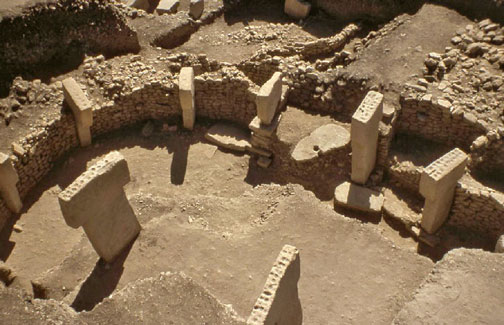
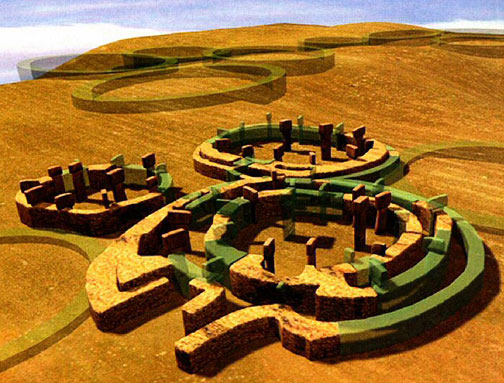
12,000-year-old circles of limestone columns weighing from 7 to 15 tons or more have been excavated in Gobekli Tepe, Turkey, about 6 miles southeast of Urfa. Older than Egypt, Sumeria and Stonehenge, 40 standing T-shaped columns have so far been uncovered in four circles 98 feet (30 meters) in diameter. Only 5% of the temple complex in repeating circles has been uncovered. Ground-penetrating radar indicates there are 250 more pillars in circles extending over another 25 acres of the 30-acre ancient site. Image © 2008 by Haldun Aydingun.
Ground-penetrating radar surveys indicate there might be at least 250 more standing stones in 18 still-buried circles. Finely honed reliefs and some 3-dimensional sculptures on the limestone columns depict boars, foxes, lions, birds, snakes, scorpions, vultures, reptiles, humans and other figures. Illustration © by Die Beweise.


Click here to subscribe and get instant access to read this report.

Click here to check your existing subscription status.

Existing members, login below:

EARTHFILES