Part 6:  Mysterious 12,000-Years-Old Gobekli Tepe, Turkey – Was Underground Cappadocia Another Escape from Catastrophe?

“Cappadocia was a huge underground refuge, and I believe many areas might date back thousands of years, perhaps even to the end of the last ice age 12,000 years ago when Gobekli Tepe was constructed.”

   - Robert M. Schoch, Ph.D., Geologist, Boston University

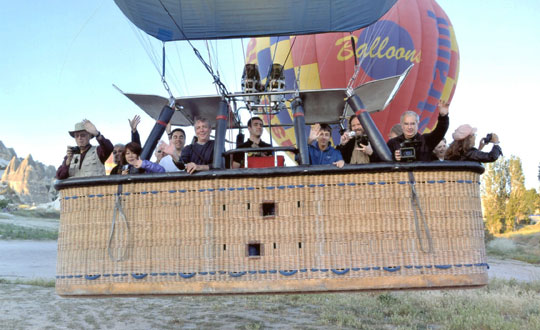
Above:  The Cappadocia region is southeast of Ankara, Turkey, in the Nevsehir Province and bounded by the four cities of Kirsehir (top left red circle); Aksaray (far left red circle); Nigde (lowest red circle in black outlined Cappadocia); and Kayseri (far right red circle in black outline). Urfa and nearby Gobekli Tepe are the red circle in lower right near Turkey and Syria border. Below: Anatolian Balloons firing up on June 11, 2012, before sunrise to take tourists for balloon rides over the spectacular and eerie volcanic landscapes of Cappadocia where Anatolians have carved homes in pointed lava ash domes and made underground cities for millennia. Balloon image © 2012 by Linda Moulton Howe.


Robert Schoch's Cappadocia balloon group rising from ground at sunrise on June 11, 2012.
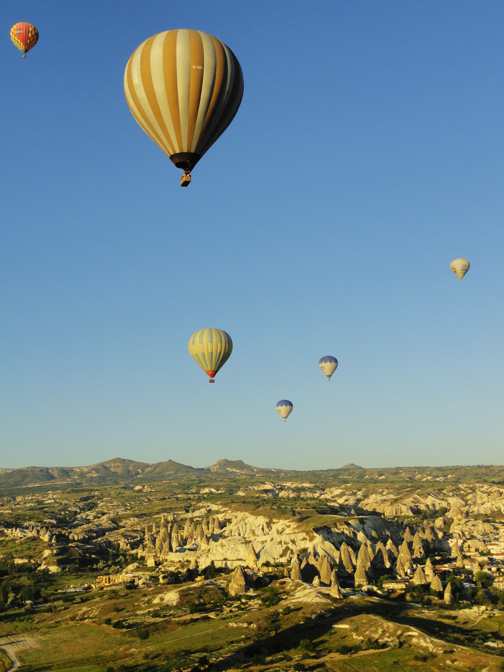
Above and below:  Anatolian and other balloons rising over volcanic landscape of Cappadocia, Turkey, on June 11, 2012. Image © 2012 by Linda Moulton Howe.

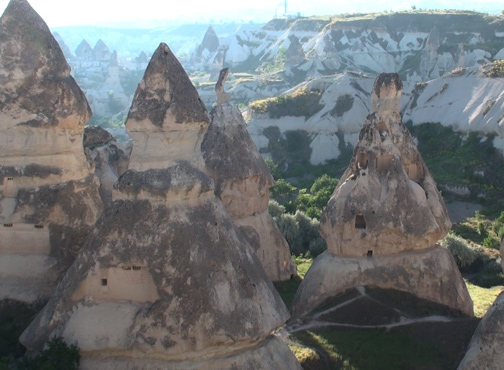
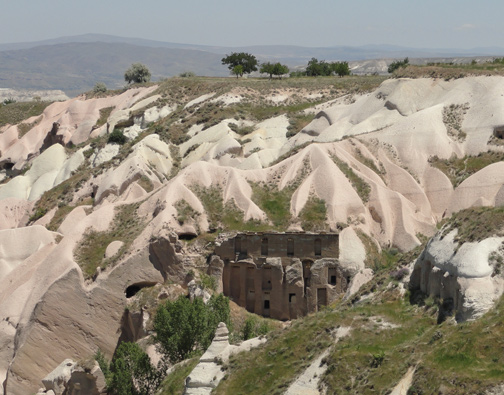
Fairy chimneys of Pasabag and Monks Valley where historians of the region say that Saint Simon in the 5th Century A.D. moved into one of the fairy chimneys to be alone after rumors that he created miracles. Image © 2012 by Linda Moulton Howe.
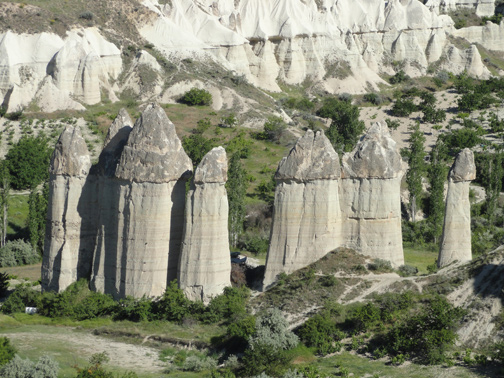
Tufa cones from Goreme in the Kiliclar Valley of Cappadocia, Turkey. Image © 2012 by Linda Moulton Howe.
Uchisar gets its name from a Hittite castle built long ago on the ancient Silk Road in the pinkish-beige volcanic rock formations. Today there are large apartment buildings that house many people. The temperature inside remains the same allthrough the year. Expansions occur by simply carving into more surrounding volcanic rock. Image © 2012 by Linda Moulton Howe.
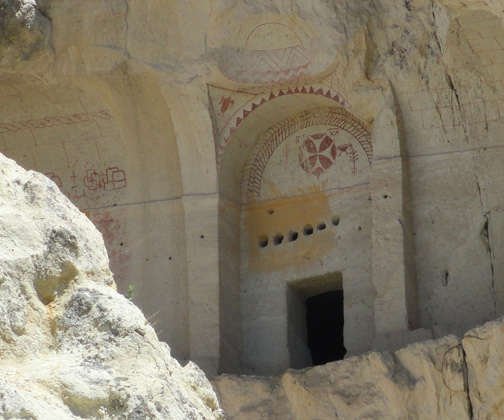
The Bible's Acts of the Apostles describes how Saul of Tarsus, Anatolia, was traveling to Damascus, Syria, when a strong light appeared in the sky that caused Saul to fall off his horse. A voice from heaven said, “Saul, why do you persecute me?” Saul asked, “Who are you, Lord?”  The voice replied, “I am Jesus, whom you are persecuting.” (Acts of the Apostles 9:5)  Saul changed his life to champion Christ and became known as St. Paul. In the Cappadocia volcanic rocks of Antakya, the first church dedicated to Christ was carved. Since then, many churches have been carved into Cappadocia volcanic rock such as the one above. Image © 2012 by Linda Moulton Howe.
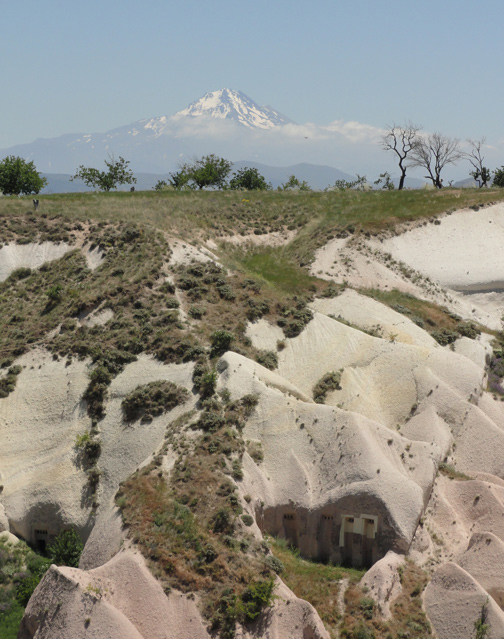
Mount Erciyes rises 12,848 feet (3,916 meters) above the Cappadocia plateau in foreground that is covered with volcanic ash mounds and “fairy houses” from this central Turkey region that had persistent volcanic eruptions millions of years ago from half a dozen volcanoes. Those continuous ancient eruptions produced the Mid-Anatolian Plateau with masses of lava and ash that are 656 feet (200 meters deep). It is possible that the Hipparion ancestor of the modern horse was killed off by all the volcanic eruptions. Image © 2012 by Linda Moulton Howe.

July 2, 2012  Cappadocia Region southeast of Ankara, Turkey, in ancient Anatolia - The western frontier of Asia known as Asia Minor was the region of Anatolia that encompassed the central uplands of modern Turkey from the coastal plain of the Aegean Sea east to the mountains on the Armenian border and from the narrow coast of the Black Sea south to the Taurus mountains and Mediterranean coast.


Click here to subscribe and get instant access to read this report.

Click here to check your existing subscription status.
Existing members, login below:

Part 5:  Mysterious 12,000-Years-Old Gobekli Tepe, Turkey – Another Artificial Covering Over Mount Nemrut

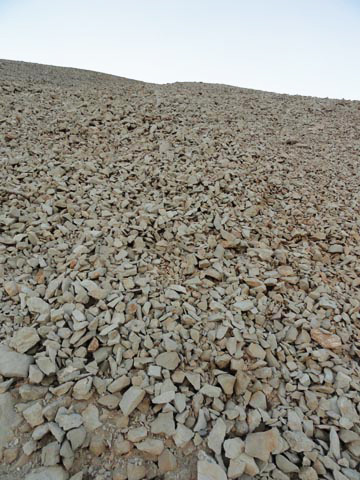
“Mt. Nemrut is clearly an artificial peak on top of the mountain. It’s piled up with gravel purposefully ... of a certain size, of a certain shape so ... it’s actually a very sophisticated pile of gravel.”

  - Robert M. Schoch, Ph.D., Geologist, Boston University


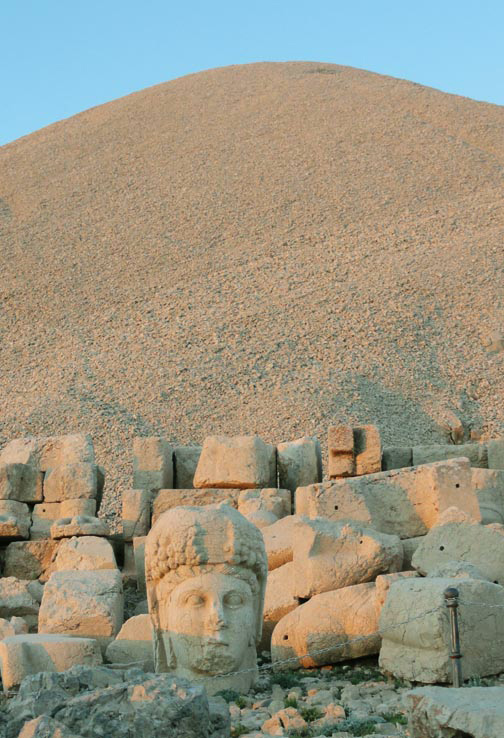
Mount Nemrut:  37° 58' 54.0012" N, 38° 44' 27.9996" E Mount Nemrut 25 miles north of Kahta, Turkey, and north of Gobekli Tepe, is another artificially covered mountain top above large stone heads of people and animals spanning cultures of Roman, Persian, Hellenistic, and Anatolian history. The artificial mountain top rises 164 feet above the carved statues that appear to have Greek-style facial features, but Persian clothing and hairstyling. Image © 2012 by Linda Moulton Howe.
2,000 years ago these similar-sized stones were piled up artificially for 164 feet on top of Mount Nemrut, Turkey, apparently as a burial tumulus for Antiochus I. Image © 2012 by Linda Moulton Howe.
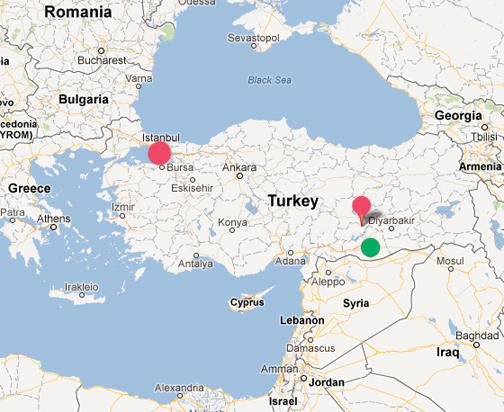
Mount Nemrut is the red circle on the right near Kahta, Turkey, that is north of the Gobekli Tepe archaeological site (green circle). Istanbul is the larger red circle on the left.

June 28, 2012  Mount Nemrut 25 miles north of Kahta, Turkey - On June 11, 2012, we traveled to see the “8th Wonder of the Ancient World,” Mount Nemrut. It's a 7,000-foot-high mountain (2,134 meters) north of Gobekli Tepe and about 25 miles (40 km) north of Kahta, Turkey. Historically, the astounding mountain burial monument disappeared from world consciousness for two thousand years until re-discovered in 1881 by a German engineer named Charles Sester, who was studying Ottoman transport routes. Then it took until 1953 for any professional archaeological research to be done.


Click here to subscribe and get instant access to read this report.

Click here to check your existing subscription status.

Existing members, login below:

Update on Baltic Sea Mystery Structure

“The divers were swimming slowly over the large circular object and suddenly passed over a ring of stones, like a small Stone Age fireplace, on the right side.”

- Peter Lindberg, Co-Owner, Ocean Explorer, Stockholm, Sweden

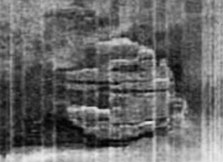
Side scan sonar image of 197-foot-diameter unidentified sunken object first discovered on June 19, 2011, 275 feet down on the floor of the Baltic Sea between Sweden and Finland. Side scan sonar image © 2011 by Ocean Explorer X-Team, Sweden.
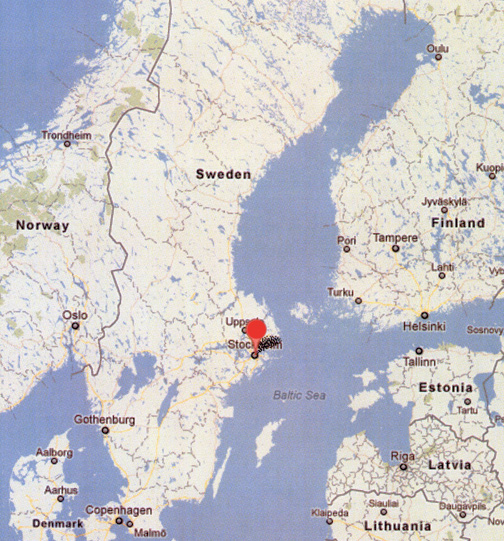
The red circle marks Stockholm, Sweden, facing the Baltic Sea, one of the largest brackish seas in the world. The water is a mixture of fresh and salt waters, but only about 35% as salty as the ocean. The Baltic waters are so murky that divers cannot see more than a few feet. The basin between Sweden and Finland was formed by glacial erosion. The Baltic Sea is about 1,600 kilometers (1,000 miles) long and averages 193 kilometers (120 miles) wide, with depths ranging from 55 meters (180 feet) to the maximum depth of 459 meters (1,506 feet).

June 28, 2012  Stockholm, Sweden - Two long-time divers who joined together in the mid-1990s to hunt for sunken treasure in shipwrecks at the bottom of the Baltic are Peter Lindberg and Dennis Asberg. They are co-owners of Sweden Ocean Explorer, a Stockholm company devoted to searching for sunken shipwrecks and treasure, who call themselves the Ocean X Team.


Click here to subscribe and get instant access to read this report.

Click here to check your existing subscription status.

Existing members, login below:

Part 4:  Mysterious 12,000-Years-Old Gobekli Tepe, Turkey – Interview with Geologist Robert Schoch.


Click for Earthfiles podcast.

“All the work Gobekli Tepe builders put into carving those pillars, erecting them, erecting walls between them at a later stage... is in many ways dwarfed by the amount of time and work and energy they put into covering them over again.”

- Robert M. Schoch, Ph.D., Geologist, Boston University


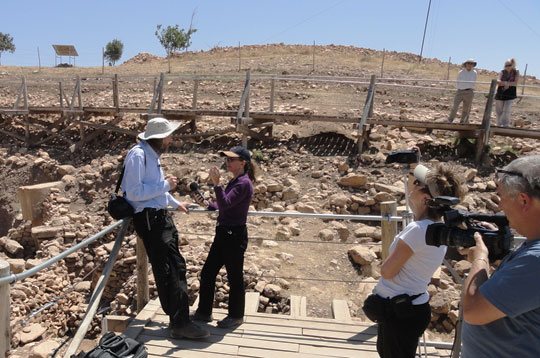
Earthfiles Reporter and Editor Linda Moulton Howe interviewed Robert M. Schoch, Ph.D., Geologist, Boston University, inside the Gobekli Tepe, Turkey, excavation site on June 13, 2012.  Right is Jennifer Stein running video camera for Linda and Leo Skorpion, videographer, Skorpion Film Production. Image by Gregory Poplawski for Earthfiles.com.
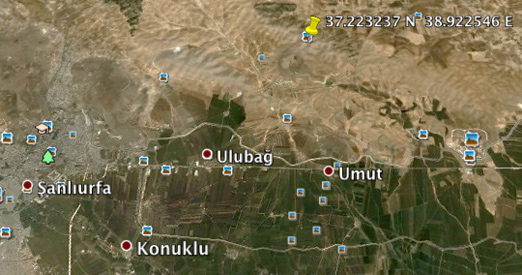
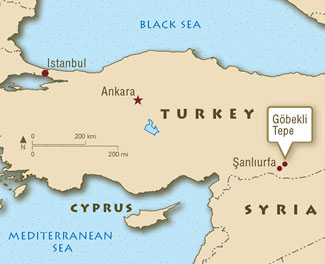
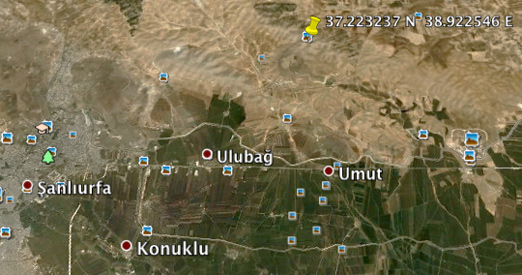
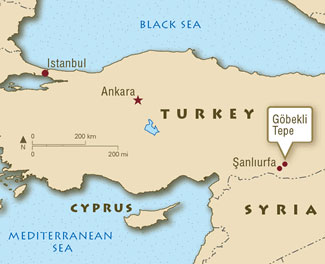
Yellow marker at coordinates for Gobekli Tepe:  37.223237° N,  38.922546° E Gobekli Tepe in Turkish means “Potbelly Hill,” an archaeological site about eight miles northeast of Sanliurfa not far from the Syrian border. The region's water comes from the Euphrates, the longest river of Western Asia, that originates upstream from Keban, Elazig Province in eastern Turkey.

Return to Part 1.

June 26, 2012  Gobekli Tepe, Turkey  - After the sun had risen to completely light up Gobekli Tepe, I interviewed geologist Robert M. Schoch, Ph.D., inside the Gobekli Tepe excavation. I asked him if given that Gobekli Tepe's creation and purpose is perhaps the greatest archaeological and historical mystery on the planet today, what does Dr. Schoch speculate happened a thousand years after the elegant, bizarre, strangely eerie pillars, totem, Urfa man and other sculptures were erected in circles over 30 hilltop acres to cause Someone to cover the whole site back over with dirt?


Click here to subscribe and get instant access to read this report.

Click here to check your existing subscription status.

Existing members, login below:

Part 3:  Mysterious 12,000-Years-Old Gobekli Tepe – Buried to Escape Incoming Comets? Meteorites? Huge Solar Flares?

“Nanodiamonds only form under very high temperatures and pressures consistent with a major cosmic impact event.”

- Douglas Kennett, Ph.D., Univ. of Oregon


Gobekli Tepe, Turkey:  37.223237° N,  38.922546° E
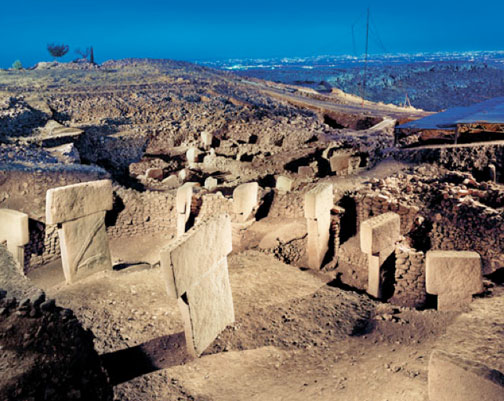
Gobekli Tepe in Turkish means “Potbelly Hill,” an archaeological site about eight miles northeast of Sanliurfa/Urfa not far from the Syrian border. Urfa city lights in background.

Return to Part 1.

June 21, 2012  Gobekli Tepe 8 miles northeast of Sanliurfa, Turkey - Who made the 30 acres of elegantly carved Gobekli limestone pillars in circles? And why? More baffling, who? or what? was gathering up tons of soil and carefully piling it over the 30 acres of 19-foot-high, T-shaped limestone pillars - covering them up a thousand years after the pillars had been sculpted by Someone? These 12,000-year-old circles of limestone pillars, cemented bases and brick walls are more than twice the age of Mesopotamia! Was Gobekli being protected because Gobekli creators had foreknowledge about a coming catastrophe? The effort needed to erect so many large stone circles over some 30 acres - and then have to bury all those pillars again centuries later – is beyond understanding. What exactly was the process to re-bury all the pillars?


Click here to subscribe and get instant access to read this report.

Click here to check your existing subscription status.

Existing members, login below:

Part 2:  Mysterious 12,000-Years-Old Gobekli Tepe – Odd Pillar Creatures, Bizarre Totem and Mouthless Man

“The T-shaped pillars have an anthropomorphic identity. But who are they?As their faces are never depicted, they seem very likely to be related to supernatural beings, beings gathered at Gobekli Tepe for certain, but so far unknown, purposes.”

- June 2012 Issue of Actual Archaeology Magazine-Anatolia, “The First Temple of the World: Gobekli Tepe.”

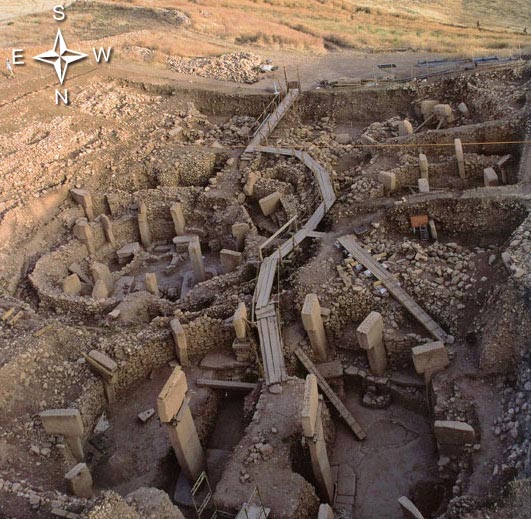
South (top), West (right), North (bottom) and East (left) view over the main excavation area at Gobekli Tepe. In the foreground Enclosure D, to the left Enclosure C, in the background Enclosures B and A. Image © 2012 by DAI, N. Becker, June 2012 issue of Actual Archaeology Magazine-Anatolia, “The First Temple of the World: Gobekli Tepe.”

Return to Part 1.

June 18, 2012  Gobekli Tepe 8 miles northeast of Sanliurfa, Turkey - As the sun rose on the eastern horizon June 13, 2012, I first faced the sun and then turned 180 degrees to face the opposite point in the west. Below me in the Gobekli Tepe Section C, a large pillar is cemented to a rectangular base like an altar. On that altar-pillar is a long-bodied animal that doesn't quite match any known Earth animal today. With the sun shining on my back, that pillar animal was facing me on an east-west axis.


Click here to subscribe and get instant access to read this report.

Click here to check your existing subscription status.

Existing members, login below:

Part 1: Mysterious 12,000-Year-Old Gobekli Tepe

“What was so important to these early people that they gathered to build (and bury) the stone rings? The gulf that separates us from Gobekli Tepe's builders is almost unimaginable.”

Smithsonian Reporter Andrew Curry

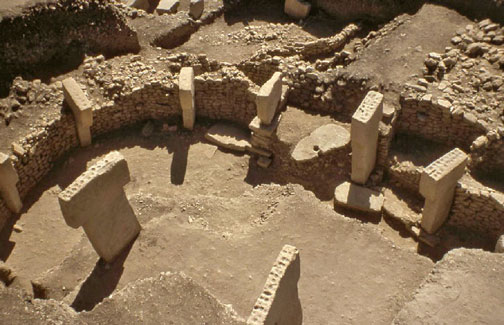
12,000-year-old circles of limestone pillars each weighing from 10 to 20 metric tons or more have been excavated in Gobekli Tepe, Turkey, about 9 miles (15 km) northeast of Sanliurfa, formerly known as Urfa or Edessa. More than twice the age of Mesopotamia, 40 standing T-shaped columns have so far been revealed in four circles between 30 feet and 98 feet (10 to 30 meters) in diameter. Ground-penetrating radar indicates there are still 250 more pillars buried in 16 circles extending over another 22 acres of the 30-acre Neolithic site. Image © 2008 by Haldun Aydingun.
Yellow marker at coordinates for Gobekli Tepe:  37.223237° N,  38.922546° E  Gobekli Tepe in Turkish means “Potbelly Hill,” an archaeological site nine miles northeast of Sanliurfa not far from the Syrian border. The region's water comes from the Euphrates, the longest river of Western Asia, that originates upstream from Keban, Elazig Province in eastern Turkey.

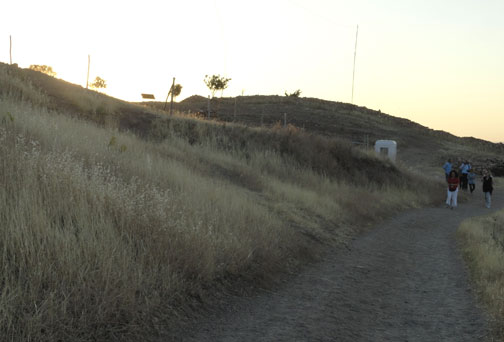
Gobekli Tepe is an artificially constructed “potbelly hill” that rises 1,000 feet above the valley floor. On a dirt path to the top on June 13, 2012, Robert Schoch, Ph.D., a geologist from Boston University, led our group to the hilltop excavation in time for sunrise. Tall poles and wires lassoed to pillars to keep them erect can be faintly seen against the sky humming eerily in the wind. Images above and below © 2012 by Linda Moulton Howe.

June 16, 2012  Gobekli Tepe 8 miles northeast of Sanliurfa, Turkey - On Wednesday, June 13, 2012, as the sun rose I was standing on the Gobekli Tepe hilltop in southern Turkey not far from the Syrian northern border. Carbon dated to 12,000 years ago, Gobekli is older than Egypt, Sumeria, classical Greeks and Stonehenge. Ramps have been built to walk around the archaeological excavations of mysterious 10 to 19-foot-tall, elegantly carved limestone pillars placed carefully in circular patterns. There are at least 30 acres of the pillar circles a thousand feet above the valley floor. Each pillar weighs 10 to 20 metric tons. Many are sculpted with odd, even unrecognizable, animals, insects and humanoid figures to be detailed in Part 2. A few unfinished pillars have been found that are 23 to 30 feet long, much larger than any of the finished standing pillars found so far. There is evidence that the pillars were roofed and that the central pair of tallest pillars may have supported a roof. The floors are made of burnt lime, similar to Roman terrazzo. The limestone slabs were quarried from bedrock pits located around 100 meters (330 ft) from the Gobekli hilltop.


Click here to subscribe and get instant access to read this report.

Click here to check your existing subscription status.

Existing members, login below:

Updated: Mysterious Booms Heard May 27 and May 28 in Four West Michigan Counties

“There are these two trees that were at least 60-feet-tall and 10 feet apart from each other ... snapped now about 15 to 20 feet off the ground ... and the upper parts are laying in my driveway.”

- John  Nieuwenhuis, Owner, Little John's Excavating and Envir. Services, Kalamazoo, Michigan

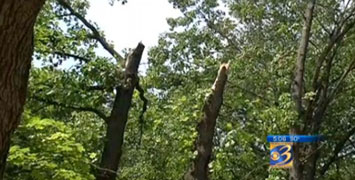
The two, once 60-foot-tall trees, snapped off about 20 feet above the ground and found by John Nieuwenhuis in his front yard as he investigated around his Kalamazoo home at 8:30 AM, Monday, May 28, 2012, after a huge boom shook his 4,000-square-foot-house. Video frame image © 2012 West Michigan News WWMT-Channel 3 (CBS).

Updated: May 30, 2012  Kalamazoo, Michigan - Between 10:30 PM on Sunday night, May 27, 2012, and the next morning at 8:30 AM local time in four counties of southwestern Michigan, something highly strange caused booms loud enough to provoke residents to call police and fire departments.


Click here to subscribe and get instant access to read this report.

Click here to check your existing subscription status.

Existing members, login below:

Updated:  Latest Italian Crop Formation – A Saros Eclipse Cycle?

“A lady that lives in a house just in front of the hill where the formation appeared told me that she was awake at 4:00 AM on May 20th because of the earthquake (near Bologne). She was not able to sleep anymore because she was scared and she looked out of the window until dawn when she saw the formation in front of her.”

- Marina Sassi, Italian crop formation investigator


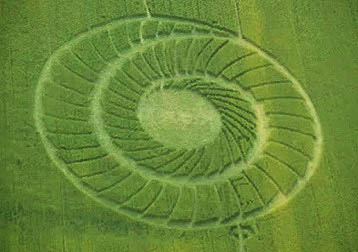
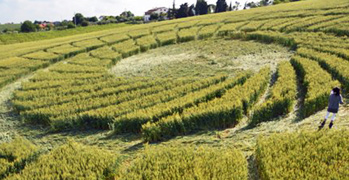
On May 20, 2012, the date of the rare annular solar eclipse, this spiral of 69 “spokes” in young wheat was reported in Bracciano, Forli Province, near Bertinoro, Italy, 50 miles southeast of Bologne. Aerial video frame © 2012 by Faenzashiatsu.
Ground image © 2012 by Giandomenico Marchi.
L-R: Moon half way across sun near 7 PM Mountain in Albuquerque, New Mexico, on Sunday, May 20, 2012. By 7:33 PM Mtn, the perfect annular eclipse ring of the sun surrounded the moon for 4.5 minutes. Then the ring broke as the moon continued moving. Finally by 8:20 PM Mtn, the sun set as a red-orange “shark's tail,” before the moon had fully passed to the sun's other side. All images © 2012 by Jon Abbott.


Updated May 27, 2012 / Originally published May 23, 2012  Bracciano, Italy - On May 20, 2012, between 7 to 8:20 PM Mountain, I was at Mesa del Sol on a hill over Albuquerque, New Mexico, to watch the rare and elegant annular solar eclipse. Albuquerque was right in the middle of the eclipse path and we were able to watch the full astronomical perfection as the Moon came between the Earth and the sun. The reason for the ring this time instead of the total solar eclipse surrounded by the solar corona was because the Moon's orbit around the Earth is not a perfect circle. The Earth-Moon distance varies by 13 percent. So when the Moon is on the far side of its orbit, it appears slightly smaller than the Sun and therefore does not completely cover the solar disc during an annular eclipse, leaving a ring of sunlight around the Moon. The May 20, 2012, annular eclipse began in China and swept eastward across Japan and the Pacific Ocean to southern Oregon, northern California, southern Utah, Northern Arizona and central New Mexico where Albuquerque was centered in the middle of the eclipse path.


Click here to subscribe and get instant access to read this report.

Click here to check your existing subscription status.
Existing members, login below:

More Than 1,000 Dolphins Dead in Northern Peru Since January – Acoustic Trauma? Biotoxins? Natural Causes?

“The dolphin broken inner ear bones are consistent with injuries that would have been caused by military sonar and apparently could be caused by the seismic activity exploration done by oil companies.”

- Hardy Jones, BlueVoice.org

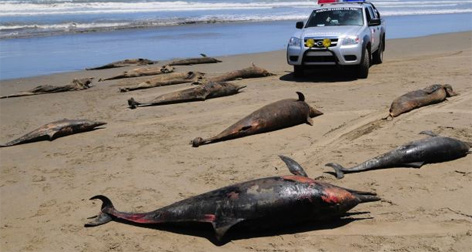
These dead dolphins were photographed in April 2012, after four months of persistent and unexplained die-offs on the beaches between Pimentel and Lambayeque north of Chiclayo and San Jose, Peru. Image © 2012 by AP, Nestor Salvatierra.
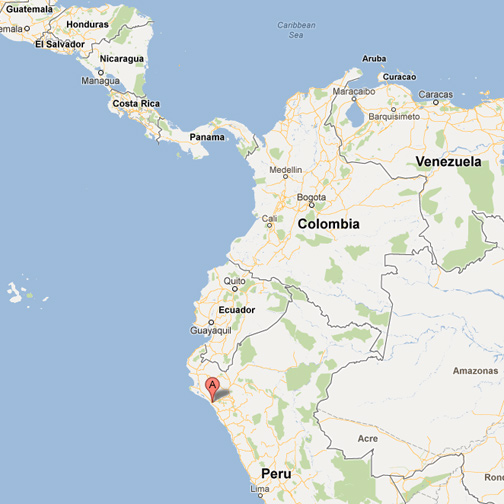
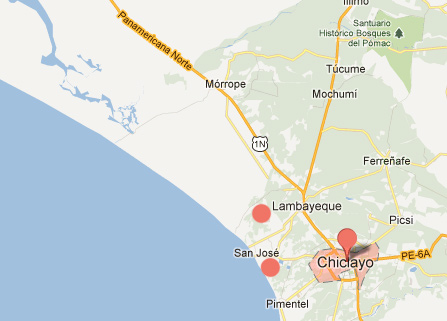
Above: The red marker shows the location of the fishing village, San Jose, and larger Chiclayo a little east of San Jose. Below: An enlargement of Chiclayo and San Jose and the beach area between Pimentel and Lambayeque where about 1,000 common dolphins and a few Burmeister porpoises have continued to wash up dead from January ongoing in May 2012, with necropsy evidence of acoustic trauma from loud underwater sounds.

May 24, 2012  St. Augustine, Florida -  Since early February 2012, about 1,000 dolphins have washed up on the beaches between Pimentel and Lambayeque near Chiclayo and the fishing village of San Jose. One veterinarian has discovered cracked and broken ear bones consistent with acoustic trauma in the dead dolphins - but what is the underwater source of explosive sounds that could damage so many dolphins and a few Burmeister porpoises?


Click here to subscribe and get instant access to read this report.

Click here to check your existing subscription status.
Existing members, login below: