





Click here to subscribe and get instant access to read this report.
Click here to check your existing subscription status.
Existing members, login below:

Return to Part I

June 3, 2006 Albuquerque, New Mexico – Following my Earthfiles and Coast to Coast AM news reports on May 31, about the agonizing Morgellons disease which has emerged over the past five years, I have received many e-mails from viewers and listeners. Below is a sampling for consideration.Click for report.


June 1 , 2006 East Texas – A month ago at the end of April 2006, a 23-year-old man named Travis Wilson killed himself after a year of suffering what has come to be called “Morgellons disease.” His mother, Lisa Wilson, said: “Fibers would come out of Travis’s hands and fingers that were white, black and sometimes red. Very, very painful.”Click for report.


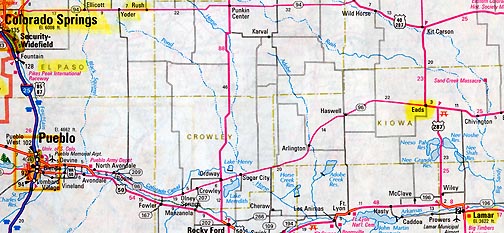
June 1 , 2006 Lamar, Colorado – I began traveling with my television crew in Kiowa, Elbert, El Paso, Logan and many other eastern Colorado counties in the fall of 1979 as I began my documentary investigation of the animal mutilation mystery which was frustrating ranchers and law enforcement that year – again. Since at least the 1960s, ranchers had been finding horses, cattle, sheep, goats, rabbits and other domestic and wild animals dead with the same excisions of tissue, usually without blood or tracks. Typically, if a dead animal were on its right side, the left ear, eye, jaw flesh, tongue and even teeth, trachea and esophagus were excised in “neat, surgical, precise cuts.” In males, the penis and testicles are either totally removed in an oval excision, or some parts of the male sexual organs are removed. In females, whole udders can be cut hide-deep, leaving behind large circular, square or triangular patterns in the belly. Or only the teats are cored out. Or half the udder neatly cut away. The vaginal tract is almost always cored out in females. And in nearly every mutilation case, regardless of sex, the rectal tissue is cored out in 6-inch-diameter holes that extend into the body as far as fourteen inches or more.Click for report.

May 15, 2006 Tanah Karo, Sumatra, Indonesia – Five people in an Indonesian family have all died of bird flu, according to Nyoman Kandun, who heads the Indonesian Healthy Ministry’s Office of Communicable Disease Control. Three others in the family also contracted the deadly H5N1 virus, but so far have survived.