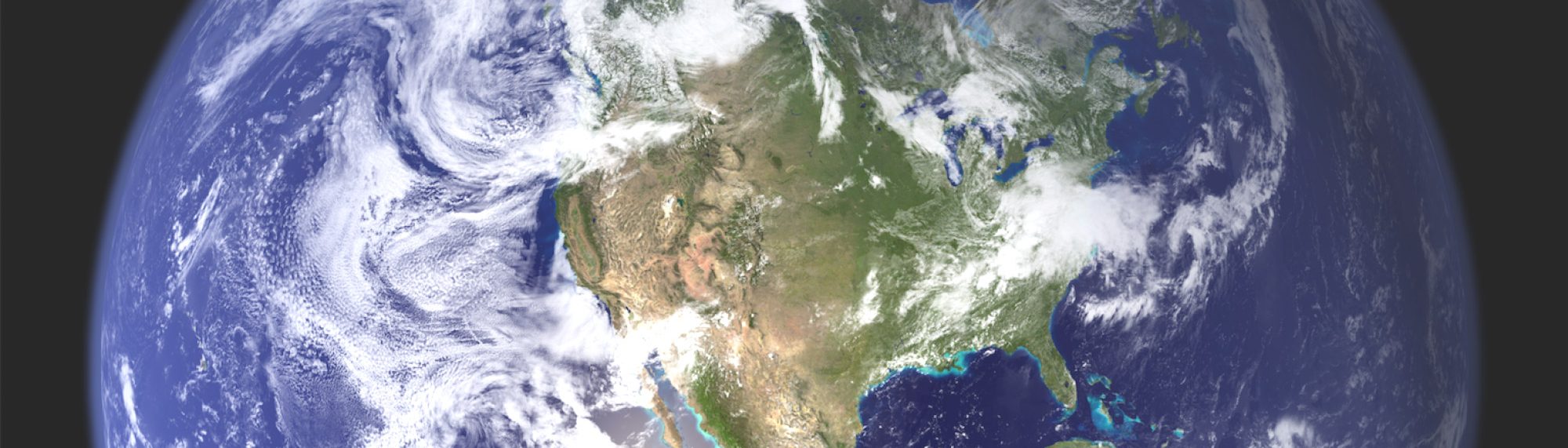

“A reversal could knock out power grids, hurt astronauts and satellites, widen atmospheric ozone holes, send polar auroras flashing to the equator and confuse birds, fish and migratory animals that rely on the steadiness of the magnetic field as a navigation aid.”
– The New York Times, July 13, 2004
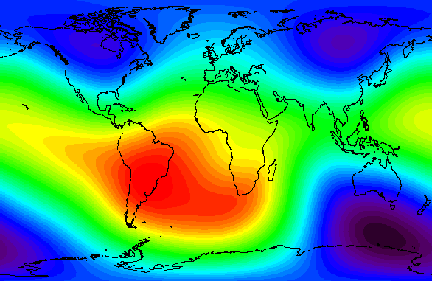

July 23, 2004 Santa Cruz, California – Magnetic field lines have been coming out of the south pole and entering the north pole of the earth for the past 780,000 years. That is called the magnetic dipole. But now scientists have been monitoring the strongest change humans have ever recorded in the magnetic field at the surface of the earth’s internal iron core four thousand miles down. The result, according to French geophysicist Gauthier Hulot, is that the South Atlantic below Africa and South America now have a magnetic field that is 30% weaker than the rest of the planet. Already some satellites passing over that weak magnetic field have suffered electronic failures because charged particles from the sun can penetrate more easily in a weak magnetic field. And over the past century, the global magnetic field has weakened about 10 to 15 percent. Recently, that magnetic field deterioration has accelerated, provoking scientists to wonder if it will build up to a pole reversal in which compasses will point to the south instead of the north.Click for report.