
Glow of Distant Worlds Seen For First Time

"...we are on the verge of finding evidence for other Earth-like planets in the neighborhood of our galaxy. That is really an incredibly profound advance in science."

- Alan Ball, Ph.D., Carnegie Institution
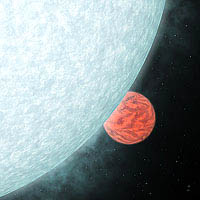
Infrared detection not currently in image form, so this is artist's version of what the distant worlds might look like in infrared. Artwork courtesy NASA/JPL-Caltech/R. Hurt.

 March 25, 2005   Washington, D. C - NASA's Spitzer Space Telescope, launched in August 2003, is the largest infrared telescope ever placed in space to orbit the sun. Now, for the first time, the Spitzer Space Telescope has captured the light and heat from two planets orbiting very distant stars, one 150 light years away and the other 500 light-years. The findings mark the beginning of a new age for planetary science, in which "extrasolar" planets can be directly measured and compared. In order for the Spitzer telescope to see the heat from such distant planets, the telescope must be cooled to near absolute zero (-459 degrees Fahrenheit or -273 degrees Celsius) so that it can observe infrared signals from space without interference from the telescope's own heat. Also, the telescope must be protected from our Sun's heat and the infrared radiation put out by the Earth. To do this, Spitzer carries a solar shield and was launched into a special orbit which places Spitzer far enough away from the Earth to allow the telescope to stay cold without having to carry large amounts of cryogen coolant. 
 

Click here to subscribe and get instant access to read this report.

Click here to check your existing subscription status.

Existing members, login below:

Astronaut John Young: “The Moon Can Save Earth’s Civilization.”

"NASA is not about the 'Adventure of Human Space Exploration.' We are in the deadly serious business of saving the species. I think over this century if we industrialize the moon and use its resources, I think it can save civilization. I think over the long haul, going to Mars will extend civilization. But I think the moon has the capability to save us." ­

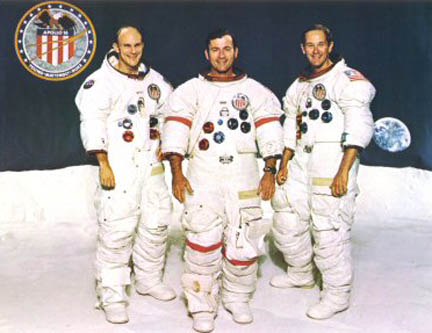
Astronaut John Young, Captain, Apollo 16 Flight to the Moon

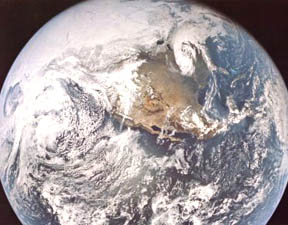
North America land mass amid the Earth's oceans and clouds in image taken from Apollo 16 after launch on April 16, 1972. Commander was astronaut John W. Young with his crew, Thomas Mattingly and Charles Duke. Apollo 16 returned in ocean splashdown on April 27, 1972. Earth image courtesy NASA.
NASA Apollo 16 crew, the tenth manned Apollo mission, April 16-27, 1972. L-R: Thomas K. Mattingly, II; Commander John W. Young; Charles M. Duke, Jr. -


Click here to subscribe and get instant access to read this report.

Click here to check your existing subscription status.

Existing members, login below:

Subterranean Life On Earth – and Mars?

"I do believe there is life inside the planet Mars, maybe 50 to 100 meters below the surface. But there is a long way to go to demonstrate that."

- Physicist Vittorio Formisano, Principal Investigator, PSF Mars Orbiter 

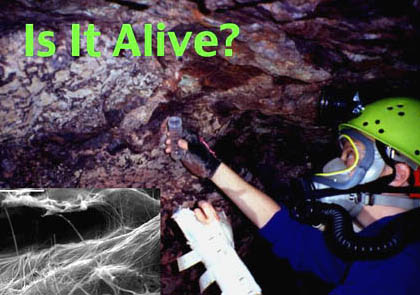
Microbiologist and atmospheric chemist, Penelope Boston, Ph.D., explores caves in New Mexico and Mexico looking for organisms (B&W inset is bacteria) that feed off a wide variety of minerals. Her evolving "Field Guide to Cave and Subterranean Microbes" might help in search for past, or present, life on Mars. Image © by Val Hadreth-Wether.

March 4, 2005  Socorro, New Mexico - Last week at the first European Space Agency Mars Express Orbiter conference in The Netherlands, the Italian physicist Vittorio Formisano presented data about not only methane and water vapor in the Martian atmosphere, but formaldehyde. Small amounts of formaldehyde had also been reported by NASA and attributed to the oxidation and break down of methane.


Click here to subscribe and get instant access to read this report.

Click here to check your existing subscription status.

Existing members, login below:

What Made Five Strong Radio Bursts At the Center of Our Galaxy?

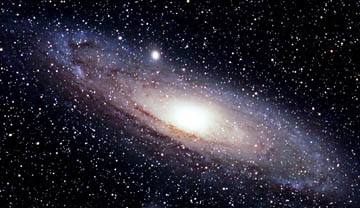
The Andromeda Galaxy is a large spiral galaxy very similar to our own Galaxy, the Milky Way. It is over 65,000 light-years in diameter and approximately 2.2 million light-years away from Earth. From Earth to the center of our Milky Way Galaxy is 8,500 parsecs ­ about 26,000 light years ­ the densest region. Andromeda image by T.A.Rector and B.A.Wolpa/NOAO/AURA/NSF.

March 3, 2005  Sweet Briar, Virginia- The current British journal, Nature, features a report about a powerful and repeating burst of radio waves toward the center of our Milky Way galaxy that are unlike any other radio bursts ever monitored on Earth. The unique event took place the night of September 30 to October 1, 2002. It has taken three years for the data to be thoroughly analyzed, compared to archive data, and finally reported publicly as a unique and puzzling event in human study of our universe. The lead scientist on the Nature article is Scott Hyman, Professor of Physics at Sweet Briar College in Virginia, who for five years has been studying the Milky Way's galactic center for the Naval Research Laboratory.


Click here to subscribe and get instant access to read this report.

Click here to check your existing subscription status.

Existing members, login below:

Mars Spirit Rover Discovered Boundary Between Gusev Lava and Older, Water-Drenched Rocks in “Columbia Hills”

"The rocks in the Columbia Hills ­ they've seen a lot of water! They've been soaked, they've been altered, there is all sort of evidence that it was a different Mars when those rocks were laid down."

- Larry Crumpler, Ph.D., Geologist

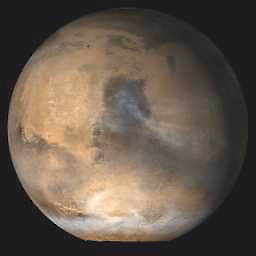
 January 18, 2004, composite image by Mars Global Surveyor (MGS) and Mars Orbiter Camera (MOC) daily global images acquired at Ls 145°. Produced by NASA/JPL/Malin Space Science Systems.
January 18, 2004, composite image by Mars Global Surveyor (MGS) and Mars Orbiter Camera (MOC) daily global images acquired at Ls 145°. Produced by NASA/JPL/Malin Space Science Systems.

February 25, 2005  Albuquerque, New Mexico - There was a discovery by the Spirit Rover on Mars which thrilled NASA scientists in the summer of 2004. Both rovers, Spirit and Opportunity, have been looking for hard geological evidence that Mars had a watery past. Spirit's discovery would hold up in a "court room" as solid evidence of water, one geologist told me. And if there was once a lot of water on the Martian surface, was there life in that water? If organisms did live in Martian water, could they still be frozen in surface ice - or even living today underground and in caves on Mars? Could living organisms explain methane, formaldehyde and water vapor reported in the Martian atmosphere?


Click here to subscribe and get instant access to read this report.

Click here to check your existing subscription status.

Existing members, login below:

Frozen Sea Near Martian Equator Size of Lake Michigan

"The most interesting thing is that we might find life there (in frozen sea) because if you look at the source of the water, which has filled a huge basin, it comes out of cracks in the ground. The indication that there are warm, wet places beneath the surface of Mars as recently as 5 million years ago to me is good evidence that life might have developed on Mars."

 - John Murray, Ph.D., Open University, England

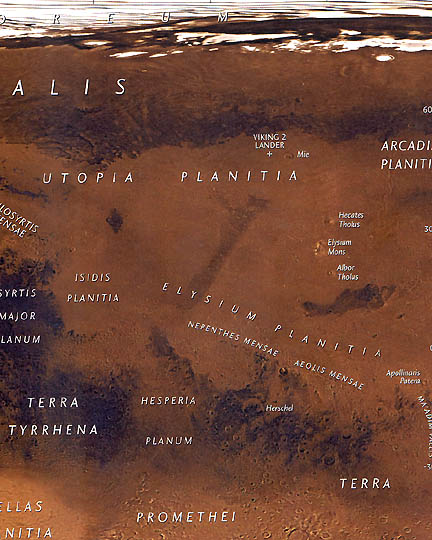
Elysium Planitia lies near the Martian equator. Map © 1998 by National Geographic Society.
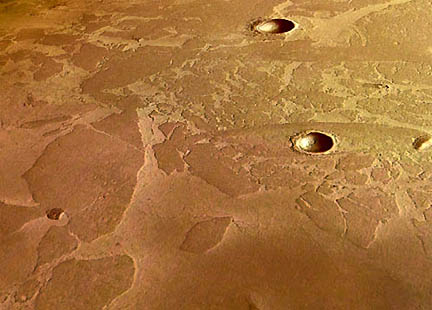
ESA Mars Express image of extensive fields of large fractured ice covered by red lava ash at the Cerberus Fossae fissures in eastern Elysium Planitia. Photograph © 2005 G. Neukum, ESA/D_R/FUBerlin.

February 22, 2005  Noordwijk, The Netherlands - On Earth, pack ice is a floating mass of ice formed from seawater in the Earth's polar regions. Pack ice expands during winter to cover about 5 percent of the northern oceans and 8 percent of the southern oceans. When melting occurs in spring and summer, the margins of the pack ice retreat. 


Click here to subscribe and get instant access to read this report.

Click here to check your existing subscription status.

Existing members, login below:

Iapetus and Enceladus: Baffling Moons of Saturn

"You could go so far as to call Iapetus pre-biotic. One of the reasons we are interested in the whole Saturnian system is the fact that it's kind of a laboratory for life. The molecules that lead to the origin of life on Earth, we think formed in the outer solar system, and we are seeing them in the Saturnian system. It's colder there and these complex molecules have persisted out there as kind of a laboratory for the origin of life."

- Bonnie Buratti, Ph.D., NASA/JPL Astronomer


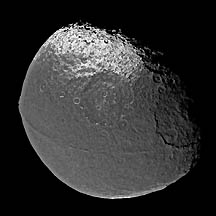
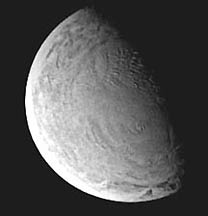
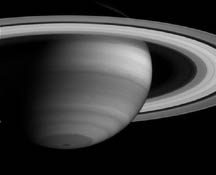
Left: Black and white Iapetus (diameter 1,426 kilometers) with a bulging "weld" around its middle. Right: Enceladus (diameter 499 kilometers) is as bright as freshly fallen snow with a bizarre, wrinkled terrain. Below: Saturn and rings imaged by Cassini spacecraft in 2004. Images credit: NASA/JPL/Space Science Institute.
Above: Black and white Iapetus (diameter 1,426 kilometers) with a bulging "weld" around its middle. Below: Enceladus (diameter 499 kilometers) is as bright as freshly fallen snow with a bizarre, wrinkled terrain. Below: Saturn and rings imaged by Cassini spacecraft in 2004. Images credit: NASA/JPL/Space Science Institute.


February 17, 2005  Pasadena, California - The current NASA Cassini mission to Saturn has produced the clearest pictures human eyes have ever seen of Saturn's rings, which are made out of ice and dust and iron. In addition to the rings, Saturn has 33 moons, including Titan ­ Saturn's biggest moon and second largest moon in the Solar System after Jupiter's Ganymede. Beyond the mysterious Titan where methane apparently rains down into dark lakes, Cassini has also taken the clearest images of two other moons which baffle scientists. Those moons are Iapetus (eye-AP-uh-tus) and Enceladus (en-SELL-uh-dus) from Greek mythology. The entire Saturnian system is named from the Greek dramas about gods and the universe. Saturn was the Titan who ruled over the Olympian Gods, including Iapetus. Iapetus was the father of Atlas, who carried the Earth on his shoulders, and father of Prometheus who was mankind's savior. Saturn ended up killing his father, Uranus, to become lord of the Universe. After the murder, revenging giants sprang from the father's blood. One of those giants was called Enceladus.
 

Click here to subscribe and get instant access to read this report.

Click here to check your existing subscription status.

Existing members, login below:

Sunspot Region 720 Emitted Strongest Solar Radiation Since October 1989

"It does look like the sun has been more active in the last 50 years than it has been for a long time. One estimate is that there has not been this long  a time period of high activity in something like 8,000 years."

- David Hathaway, Ph.D., NASA

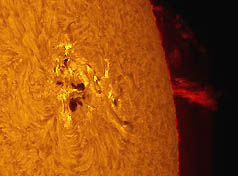
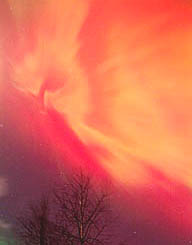
Left: Giant sunspot 720 erupted for seventh time on Jan. 20, 2005, unleashing a powerful X 7-class solar flare. The blast hurled a coronal mass ejection (CME) into space and sparked the strongest radiation storm since October 1989. Jack Newton of Arizona photographed the sunspot rotating toward the sun's limb and other side on Jan. 19th. Right: Bright auroras spread across northern Europe on January 21st soon after 720's coronal mass ejection crashed into Earth's magnetic field. The result was a spectacular aurora display over Europe. Jim Henderson photographed the vivid red and yellow light near Aberdeen, Scotland.
Above: Giant sunspot 720 erupted for seventh time on Jan. 20, 2005, unleashing a powerful X 7-class solar flare. The blast hurled a coronal mass ejection (CME) into space and sparked the strongest radiation storm since October 1989. Jack Newton of Arizona photographed the sunspot rotating toward the sun's limb and other side on Jan. 19th. Below: Bright auroras spread across northern Europe on January 21st soon after 720's coronal mass ejection crashed into Earth's magnetic field. The result was a spectacular aurora display over Europe. Jim Henderson photographed the vivid red and yellow light near Aberdeen, Scotland. 


February 11, 2005  Huntsville, Alabama - On Saturday, January 15, the Sun erupted with three strong solar flares. The next day, the Sun erupted again. The Space Weather office at the National Oceanic and Atmospheric Administration (NOAA) in Boulder, Colorado, released warnings about intense radiation storms that could damage satellites and interrupt radio communications. By Monday, January 17th, the Sun erupted yet again with a strong solar flare and some of the brightest auroras in years were being photographed over the northern latitudes. The next day there was yet another strong solar flare, totaling six major eruptions in four days.'


Click here to subscribe and get instant access to read this report.

Click here to check your existing subscription status.

Existing members, login below:

EARTHFILES