
What Is the Strange Texas “Chicken-Eater”?

“At first glance, you would think of a deer’s head on a kangaroo’s body.”

– Stacey Womack, Dog Breeder, Pollok, Texas
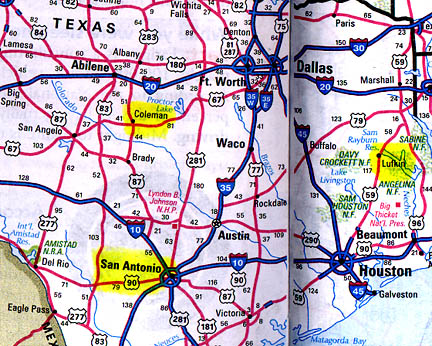
Since Memorial Day 2004, three strange creatures that look alike have been killed on Texas farms in Elmendorf near San Antonio; Pollok near Lufkin; and Coleman southeast of Abilene.

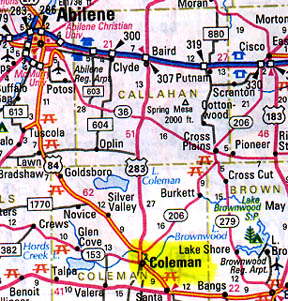
August 31, 2005   Coleman, Texas – Memorial Day weekend of 2004, Dave McAnally shot a so-called “chupa” creature on his Elmendorf, Texas, property south of San Antonio. See 073104 Earthfiles. Five months later on October 8, 2004, Stacey Womack’s brother shot a similar looking creature on their Pollok farm near Lufkin, Texas. See 101404 Earthfiles. Then in the first week of August 2005, a man in Coleman, Texas who requests anonymity, shot and killed another very similar-looking creature, but threw it in the trash. To date, no veterinarian has seen a fresh kill and no one knows exactly what the grey-skinned creature is that likes to kill and eat chickens.

Elmendorf, Texas, Memorial Day Weekend, 2004
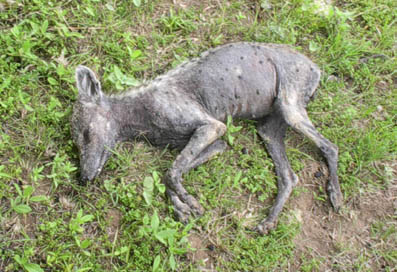
Unidentified animal photographed by Devin McAnally about six hours after he shot the creature. No blood visible. Described as about 20 inches tall, 30 inches long with 2-inch-long, thin, fangs that extended downward from upper jaw and overlapped with 1.5 inch fangs protruding upward from lower jaw. (Not visible in photos.)  There are spots on the hide and sparse hair similar to descriptions by eyewitnesses in Puerto Rico of the alleged “chupacabra goat-sucker” there. Digital photograph © 2004 by Devin McAnally.

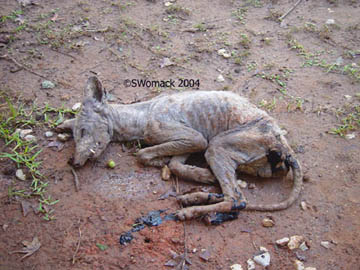
Pollok, Texas, October 8, 2004 

October 8, 2004, photograph of the unidentified animal soon after it was shot in the right eye by Stacey Womack's brother in Pollok, Texas. Digital image © 2004 by Stacey Womack.   Coleman, Texas, Around August 16, 2005 
October 8, 2004, photograph of the unidentified animal soon after it was shot in the right eye by Stacey Womack’s brother in Pollok, Texas. Digital image © 2004 by Stacey Womack.

Coleman, Texas, Around August 16, 2005

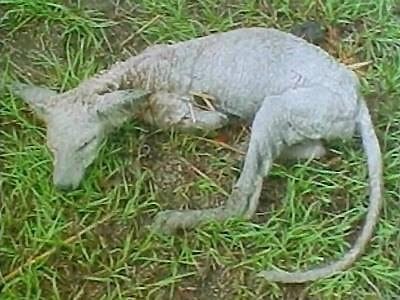
Reginald Lagow took this photograph after his neighbor shot the animal dead around August 16, 2005, and then threw the body in the trash. "The animal's hide felt like wool."
Reginald Lagow took this photograph after his neighbor shot the animal dead around August 16, 2005, and then threw the body in the trash. “The animal’s hide felt like wool.”

Interviews:

Reginald and Ruth Lagow, Chicken Farmers, Coleman, Texas:

Reginald saw creature around first week of August 2005: “There isn’t much to say except that nobody seems to know what it is. Except I did see it run and it ate most of my chickens. When I saw him while he was alive, he did not give me time to see anything. In fact, he ran very fast, ran like hell!

DID THE CREATURE RUN ON FOUR LEGS OR TWO?

I don’t know. He took off carrying a chicken and ran less than 50 yards. He had caught that chicken real quick. We’d been losing chickens for several days, but we didn’t know what was killing them. We lost 14 chickens over a period – sometimes we lost as many as two a day.

DID IT LOOK LIKE A DOG CARRYING A CHICKEN IN ITS MOUTH?

I didn’t realize anything except a chicken was running. The next thing I knew, it had already caught it and before I could get to it, the creature had already killed it and saw me coming and went through a fence, probably 50 yards from where I saw it. It all happened so quick!

HOW BIG DID YOU THINK IT WAS WHEN YOU SAW IT LIVE?

It probably weighed about 15 to 18 pounds.

ABOUT HOW LONG AND HIGH?

If it were standing up, the back legs are ­ the back leg is 2/3s the length of the body at least.

WHEN YOU SAW IT RUNNING AFTER YOUR CHICKEN, HOW BIG WAS IT COMPARED TO YOUR CHICKEN?

I didn’t have a comparison. I heard the chicken hollering and I came a running. The next thing I knew, the creature had killed it and tried to get away from me.

SO, YOU RAN UP AFTER THE ANIMAL HEARING THE CHICKEN, BUT YOU DID NOT SEE THIS ANIMAL ATTACK THE CHICKEN?

No. All I know is that by the time it got there, it had already broke the hide on the chicken’s neck. Then the next time I saw it, it was dead ad rigor mortis had already set in.


Neighbor Shot Strange Animal Around August 16, 2005

DID YOU NOTICE ANYTHING ABOUT THE FACE?

The teeth I looked at after it had already been dead for probably 12 or 14 hours. Rigor mortis had set in and I had no idea it was going to be something like it turned out to be. So, I did look at its teeth, but they were almost transparent. They weren’t over a half-inch long protruding from the gums.

SO YOU LOOKED AT THE ANIMAL AFTER YOUR NEIGHBOR SHOT IT?

Yes, because I took a picture of it. I have a little digital camera and then I carried it around for several days and finally I carried it down to the veterinarian’s office. I had written on it, ‘What is it?’ And it started getting excitement as it went around. We didn’t know anything about it and now the more we try to find out, the less we know.


No Blood In Chicken Deaths

IN THE CHICKEN DEATHS, HAVE YOU AND YOUR NEIGHBORS FOUND ANY BLOOD ON THE CHICKENS?

Nope. They never saw any blood.

THAT’S ALWAYS BEEN ONE OF THE PECULIAR ASPECTS OF THIS ­ IS THIS CREATURE PUNCTURING THE CHICKENS AND SUCKING THE BLOOD? OR WHAT IS IT DOING?

I don’t know.

DID YOUR NEIGHBORS FIND ANY PUNCTURE WOUNDS IN ANY OF THEIR CHICKENS OR ANIMALS?

The thing is, the creature would kill a chicken and eat half of it before we’d even realized it had been killed.

SO WHATEVER THIS CHICKEN WAS DOING, IT WAS EATING FLESH OFF OF THE CHICKEN ­ NOT JUST PUNCTURING HOLES TO SUCK BLOOD?

That’s right. After it killed, it would eat the flesh because the time I’d caught it in the trap, it had left quite a bit of chicken there. I put that leftover in the back end of the trap and placed the trigger where he could not get anything without getting caught. He outsmarted me. He got in there and got away.

WHEN YOU FOUND YOUR DEAD CHICKENS, WHAT DID THEY LOOK LIKE? WHICH PARTS HAD BEEN EATEN?

They started with the neck apparently. You could see a gob of fat there where they had started eating and then they would eat all they cold and probably come back the next day and get some more. I would use what was left of their kills to try to trap the creature/s.

DID THEY EAT THE HEADS OFF FIRST?

When they do that, I always think it’s a skunk. I’ve had that happen. I’ve caught some skunks in my trap, but it’s been awhile.

DID YOU NEIGHBORS HAVE CHICKENS IN WHICH THE HEADS HAD BEEN BITTEN OFF?

Yes, but then that’s been before. I’m talking about the past month.

DID YOU FIND CHICKENS IN WHICH THE BREAST MEAT AND MUSCLE TISSUE HAD BEEN EATEN?

Well, I have some small chickens called Hamburg. The creature would eat 2/3s of one of those sometimes. But that’s a small little hen. Sometimes when I was not watching close enough, I would go around the outer fence of my chicken pen and the creature would kill dead chickens to the fence and eat parts of them and leave the rest.

Not realizing what it could possibly be, I just am only half way able to report only half of what I should.

SO FAR, NO ONE THAT YOU HAVE SHOWN YOUR DIGITAL PHOTOGRAPH TO, INCLUDING THE VETERINARIAN, HAS BEEN ABLE TO IDENTIFY EXACTLY WHAT THIS CREATURE IS?

That’s right. My brother saw it and he’s spent quite a bit of time in Mexico.

WHAT DID HE SAY?

He did not know. The first thing he said was it must be something that has been concocted by somebody mixing animals (genetically). He thinks it must have come out of a laboratory.”

(He’s going to keep his trap going to try to catch another creature)

I keep my trap set at all times and keep it baited. It’s right next to my chicken pen at the edge of town.


Reginald Lagow Set Trap for “Chicken Eater”

By the time I got the trap set to catch it, I caught it in the trap. But it was smarter than I was. It untied the trapdoor I had on top and got out.

I WONDER HOW IT WOULD UNTIE THE ROPE IF IT ONLY HAS CLAWS ON ITS FEET?

I’m fairly familiar with raccoons. They outsmart a lot of us.

BUT A COON HAS HANDS WITH FINGERS. THIS CREATURE THAT IS IN YOUR PHOTOGRAPH THAT THE NEIGHBOR SHOT ONLY HAS CLAWS ON ITS FEET, RIGHT?

I don’t know. I did not unfold them and look at them like I should have. There are so many things I realize I did not do. It makes me wonder how I got as far along as I am! (laughs)

DID YOU SEE ANYTHING IN THIS CREATURE’S EYES?

He had his eyes closed.

WHEN YOU SAW IT RUNNING AFTER THE CHICKEN, WERE YOU ABLE TO SEE ANYTHING ABOUT ITS EYES THEN?

No. All I know you can tell as much from the photograph I took as I know.

WHAT ABOUT THE HAIR OR COVERING OF THE ANIMAL?

It feels like wool (touched it). It does not look like it has hair at all. But the back leg when I moved it out to get a better picture of it, it felt like a dog’s leg. I don’t know if it has three or four toes. I think it has four toes. But I don’t know.

IT WAS A LONG TAIL?

You can see the tail on the photo ­ it was almost as long as the body.

WAS THERE A TASSEL ON THE END?

I don’t think it has much of one. It’s just a little bit.

IT SURE WOULD BE NICE TO GET DNA ANALYSIS OF WHATEVER THIS CREATURE IS.

Yes, but I have no idea.”

Ruth Lagow: “THE ACTUAL KILLING OF THE CREATURE WAS WHEN?

Close to two weeks ago from now. The chicken kills began about in late July. We had about 14 chickens killed total and so did our neighbor. And it was starting in on the next neighbor over, so that was mounting up to about a month of kills. And it’s been at least a couple of weeks since our neighbor shot it.

DID YOU ALL THREE SEE THIS ANIMAL?

No, there were only two people who saw it alive.

WHO SAW IT ALIVE?

Reg and the neighbor who killed it. Reg did not kill it. He thought he had it in a trap one night because he caught something that got in the trap, ate the bait (dead chicken) and got out through the opening by untying a nylon rope. It was untied just like a human would have untied it.

Then the neighbor was at his barn one day and his dog had this strange animal cornered. He was the neighbor who killed it. He called Reg and said he had got the ‘chicken eater.’ So, Reg went over and took a picture of it.

It did not have hair. It was more like wool. And it had a real long tail, but it certainly was not a kangaroo because a kangaroo has a thick tail that it sits on when it raises up.

OTHER ANIMALS RESEMBLING YOUR PICTURE KILLED IN TEXAS THE PAST COUPLE OF YEARS HAVE HAD DARK SPOTS ON THEM. THE CREATURE AT YOUR PLACE APPEARS TO BE ALL WHITE?

It was light grey. It had been raining on it. It was a rainy day, but the vet said it did not have fangs from looking at the picture. Reg also looked at the teeth and he said they were almost translucent-looking, the funniest teeth he had ever seen.

DID THE VET EXAMINE THE CREATURE?

No, he didn’t. The neighbor who killed it just threw it in the trash. They did not realize what it might have been. He was just getting rid of a chicken eater. And he has a bunch of goats, too, and that chupacabras is supposed to be a goat and chicken eater.

WHAT IS THE NAME OF THE NEIGHBOR WHO SHOT IT?

This neighbor will not talk about it and does not want his name mentioned.

IS THAT WHY HE JUST THREW THE CREATURE AWAY?

I think he did not realize what he had ­ that’s why he threw it away. It was just a critter getting into his chickens. Reg took the picture that day before the neighbor threw the creature in the trash. Reg was showing it to everyone in town and at the vet’s. He took it over to the vet to see what they’d say about it. There is only one veterinarian clinic here and they said it looked like a chupacabras.

THAT’S STRANGE BECAUSE THE CHUPACABRA – WHATEVER IT IS – HAS ONLY BEEN SEEN IN PUERTO RICO, MEXICO, SOUTHERN FLORIDA, SOUTH AMERICA ­ AND THAT WAS MOSTLY IN THE MID-1990S. THIS CREATURE IN TEXAS HAS BEEN SEEN ONLY THE PAST COUPLE OF YEARS.

I have no idea. Reg said it was not like anything he had seen before and he heard the chicken making noise. That’s why he went running to find it. The creature was close to the chicken pen by the time Reg got out there. It had killed this chicken and was going through the fence. It was a small animal. Maybe the photograph makes it look like it was larger than it was. He said it was about 2 to 3 feet long, but not so tall. It had a woolly coating, instead of hair. It was not hair. It was just a strange animal that appeared and we don’t know where it came from or what it was.

HOW DID IT ATTACK?

It broke the chicken’s neck. But it dropped the chicken and ran through the north fence near the chicken pen. We were looking for something like a blood-sucking animal at that time. But one time, Reg found a chicken that had its head eaten off down into the wing section.

But in the photo, I thought the creature did look like it was malnourished, given the number of chickens we think it has eaten. It must have had a pile of them somewhere!”


More Information:

For other Earthfiles reports about alleged “chupacabras”, see Earthfiles Archives:

  • 06/23/2005 —  More Than 3,000 Unusual Animal Deaths Reported in Argentina and Chile Since 2002
  • 10/23/2004 —  Veterinarian Examines Pollok, Texas Carcass
  • 10/20/2004 —  Pollok, Texas “Chupa”: Strange Mammal or Mangy Coyote?
  • 10/14/2004 —  Another “Chupacabra” Shot in Texas
  • 07/31/2004 —  Strange Animal Shot by Elmendorf, Texas Farmer
  • 07/19/2002 —  Unusual Animal Deaths and Unidentified Aerial Lights Persist in Argentina
  • 06/15/2002 —  Cattle Mutilations In LaPampa, Argentina
  • 06/01/1999 —  Puncture Wounds On Dogs In Woodleaf, North Carolina
Another Cattle Mutilation in Canada

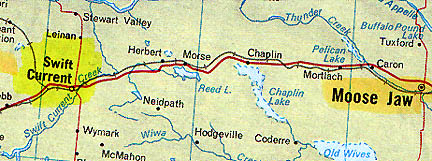
In Swift Current, Saskatchewan, Canada, west of Moose Jaw,  rancher Douglas Davidson and his brother discovered a bull calf dead on August 18, 2005, with precise, bloodless excisions of tissues.

August 26, 2005    Swift Current, Saskatchewan, Canada – News stories are coming in from all over the world about animal die-offs, including birds, seals, fish, and amphibians that might be linked to global warming. There are also the persistent bizarre, bloodless animal deaths called mutilations which have been reported since at least the early 1960s and are ongoing from South America to North America and Europe. Ranchers and law enforcement have told me about unidentified aerial lights often seen over pastures where the odd deaths occur. A dozen eyewitnesses have described seeing a glowing beam that can lift animals up and lower them back down in pastures dead and surgically cut up without blood or signs of struggle. Usually the same tissues are removed: an ear, an eye, jaw flesh, and the tongue is removed deep within the throat. Genitals, rectal and/or vaginal tissues are excised.Click for report.

What Is Killing Amphibians Around the World?

“The amphibians are like canaries in a coal mine and they are in trouble first. …The fact of the matter is: we have only one coal mine for planet earth. The coal mine is in trouble right now. And the amphibians are telling us ­ it’s a warning!”

– Andrew Blaustein, Ph.D., Oregon State University Zoologist

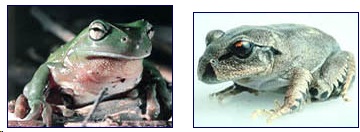
Left: Chytrid fungus infection shows in the pink underbelly of green tree frog. Right: Great barred frog has a severe Chytrid fungus infection that is causing its skin to peel off.  Images by Australia National Parks and Wildlife Service.
Left: Chytrid fungus infection shows in the pink underbelly of green tree frog. Right: Great barred frog has a severe Chytrid fungus infection that is causing its skin to peel off. Images by Australia National Parks and Wildlife Service.


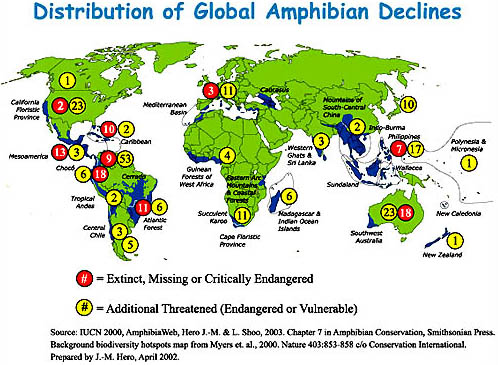
August 26, 2005    Corvallis, Oregon – What is killing amphibians around the world? The die-off in many species began in the 1980s and has not stopped. There have been waves of extensive amphibian die-offs in Australia, Central and South America and spreading into North America. Zoologists and other scientists have been forced to look urgently for the cause. One of the culprits is a fungus called Chytrid (KIT-trid) which attacks amphibians in such a way that they can’t eat. Its formal name is Batrachochytrium dendrobatidis, which was first discovered on dead and dying frogs in Queensland, Australia in 1993. Australia’s Commonwealth Scientific and Industrial Research Organization (CSIRO) reports, “This is the first time a chytrid fungus has been found to parasitize vertebrates.”Click for report.

Unusual Summer Swarm of Arkansas Copperheads

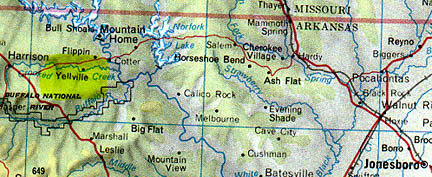
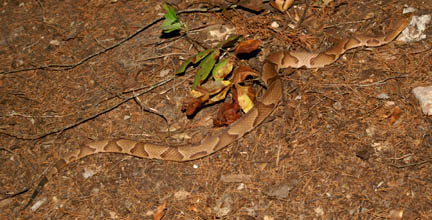
Adult male, juvenile male and juvenile female copperheads began swarming in Yellville, Arkansas, yard by mid-July 2005, three months earlier than normal move to dens for winter hibernation.
Arkansas copperhead moving toward cedar tree in Chuck Miller's Yellville, Arkansas, back yard. Photograph © 2005 by Stan Trauth, Ph.D.
Arkansas copperhead moving toward cedar tree in Chuck Miller’s Yellville, Arkansas, back yard. Photograph © 2005 by Stan Trauth, Ph.D.

August 18, 2005  Yellville, Marion County, Arkansas – In mid-July, zoologist Prof. Stan Trauth in the Biological Sciences Department at Arkansas State University received a phone call from the Arkansas state herpetologist, Kelly Irwin. There was a swarm of at least sixty copperheads in the back yard of Yellville, Arkansas, resident, Chuck Miller. After five years of living on his forested ridge property, Mr. Miller knew it was too early and he’d never seen so many snakes together before. Copperheads don’t usually move into groups, or “aggregates,” until late September to October for hibernation.Click for report.

Mystery of Bloodless, Decapitated Kangaroos in Melbourne, Australia

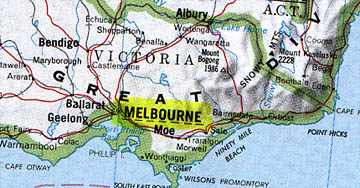
Melbourne is the capital of Victoria state in southeastern tip of Australia with a population of 3.5 million people.
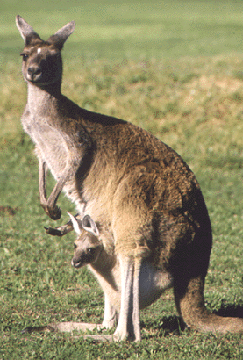
Australian kangaroo mother and baby © by George Harrison.

August 13, 2005  Melbourne, Australia – Unusual, bloodless mutilations of animals is a worldwide phenomenon. The types of animals range from cows and horses to smaller domestic animals such as pigs, goats, sheep, rabbits and even wild animals such as deer and elk. Then there are the terrible cases of pet dogs and cats being found cut in half or beheaded or paws cut off and skinned ­ all without blood or signs of struggle at the scene where found. Recently half cats by the dozens have been reported again in the Seattle, Washington, region and Dallas, Texas. I’ve reported on Dreamland about the Seattle situation which authorities there dismissed as coyote kills.Click for report.

Three Extraordinary U. K. Crop Formations Reported August 9, 2005

August 9, 2005  Wiltshire, England

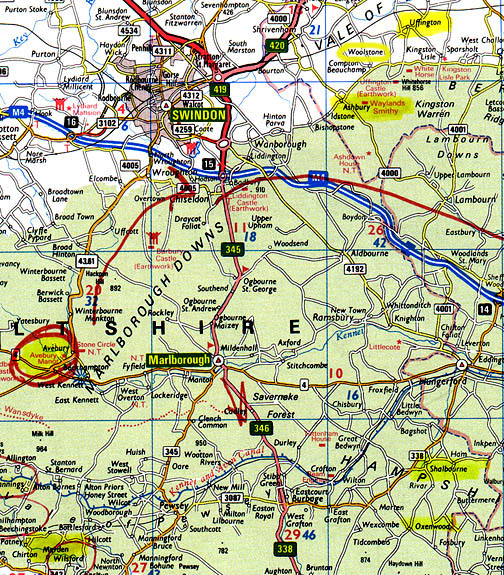
On August 9, 2005, three crop formations were reported in three Wiltshire County sites. Each is marked in yellow, along with the Avebury sacred stone circle at the heart of crop formation country. Northeast of Avebury is Waylands Smithy megalithic site near Ashbury and Uffington Castle, Wiltshire; southeast is Shalbourne; and straight south of Avebury is Marden.

1) Waylands Smithy Megalithic Site Near Ashbury

Waylands Smithy, near Ashbury, Wiltshire, ancient megalithic stone circle and long barrow. Photograph © by Alan Fisher.

The Waylands Smithy long barrow lies in a plantation of trees on the famous Ridgeway, not far from the Uffington White Horse and Uffington Castle. Excavations in the 1960s revealed the barrow was constructed in two phases. There is a wooden mortuary enclosure with stone floor that was later covered by a trapezoidal mound of chalk. Inside there are three chambers, one main one and two to the sides.Click for report.

Mysterious Light Photographed in Canadian Woods

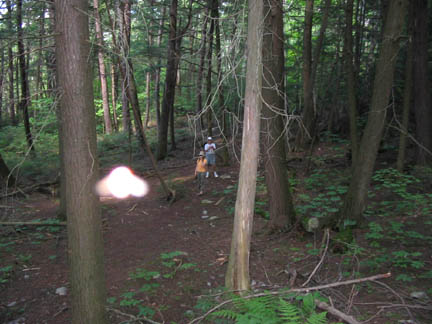
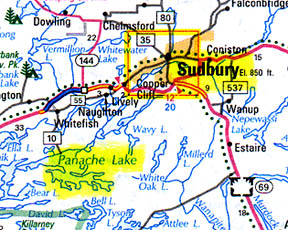
Panache Lake, southwest of Sudbury, Ontario, Canada. Late afternoon digital photograph taken inside the shady woods. The hikers did not see the mysterious light. Photograph provided by Dennis Donohue. 
Panache Lake, southwest of Sudbury, Ontario, Canada. Late afternoon digital photograph taken inside the shady woods. The hikers did not see the mysterious light. Photograph provided by Dennis Donohue.
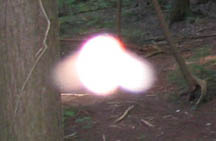
Cropped close-up of the mysterious light in the digital image.
Panache Lake southwest of Sudbury is north of Toronto and not far from Lake Huron in the Great Lakes.

August 7, 2005  Sudbury, Ontario, Canada – Recently I received an e-mail from a Canadian resident with a 2004 photo attachment that looks very similar to a mysterious light photographed in Glass Mountain, Australia, grass circles back in April of 2004. Below is the e-mail and attached photograph, along with a look again at the April 2004, grass circle and mysterious light images from Australia.Click for report.

Scientists Puzzled by “Bizarre” Pacific Coast Die-offs in 2005

Julia Parrish, Ph.D., sea bird ecologist with dead Brant's cormorant on Washington beach. Tens of thousands of sea birds have been washing up dead from Southern California to British Columbia in Canada, starving from lack of food. Photograph © 2005 by AP.
Julia Parrish, Ph.D., sea bird ecologist with dead Brant’s cormorant on Washington beach. Tens of thousands of sea birds have been washing up dead from Southern California to British Columbia in Canada, starving from lack of food. Photograph © 2005 by AP.

August 5, 2005 Corvallis, Oregon, and Seattle, Washington – This week, forest fires raged across southern Spain and Portugal, adding more CO2 to the already-thick blanket of carbon dioxide that surrounds the Earth now and is warming global temperatures. Europe is in its second hot, bad drought of the past three years. Spain has received less than half its normal rainfall and is challenged by the worst drought since record keeping began in 1947.Click for report.

Another Cattle Mutilation in Pondera County, Montana

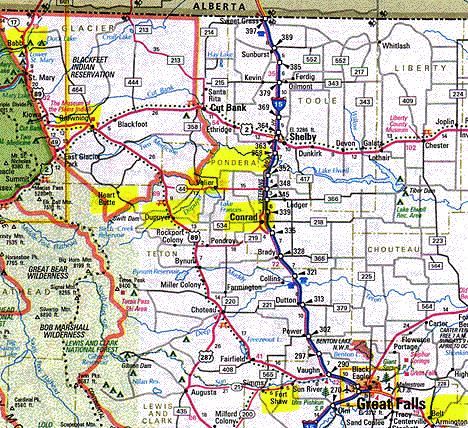
 The yellow areas are where more than a dozen cattle mutilations have been reported in Montana's Pondera, Teton and Glacier Counties in 2001. Twenty-seven years ago in 1975-1976, one center of animal mutilation activity was around Great Falls, Malmstrom AFB and the Minuteman missile sites in Cascade County.
The yellow areas are where more than a dozen cattle mutilations have been reported in Montana’s Pondera, Teton and Glacier Counties in 2001. Twenty-seven years ago in 1975-1976, one center of animal mutilation activity was around Great Falls, Malmstrom AFB and the Minuteman missile sites in Cascade County.

14 Cattle Mutilations Reported to Pondera County Sheriff’s Office
(6 more unofficially reported) in 2001:

­ June 12, 2001 – Don Reishus, Depuyer (Pondera County) – Mutilated cow.
­ June 12, 2001 – Karl Rappold, Depuyer (Pondera County) – Alive bull with severed tail.
­ June 26, 2001 – Mark Taliaferro, Depuyer (Pondera County) – Mutilated cow with blue-green color on jaw tissue.
­ August 6, 2001 – Steve Young, Fort Shaw (Cascade County) – Mutilated cow.
­ August 15, 2001 – Larry Elings, Browning (Glacier County) – Mutilated yearling.
­ August 15, 2001 – Doug Banka, Belt (Cascade County) – Mutilated cow.
­ August 31, 2001 – Gerald Miller, Conrad (Pondera County) – Mutilated cow.
­ September 24, 2001 – Jim Vandenbos, Conrad (Pondera County ) – Mutilated cow with “burned off” hair.
­ October 6, 2001 – Everett King, Valier (Pondera County) – Mutilated Charolais cow in impact crater.
­ October 21, 2001 – New Miami Hutterite Colony, Dupuyer (Pondera County) – TWO mutilated cows.
­ October 28, 2001 – Robert Lettenga, Conrad (Pondera County) – Mutilated cow.
­ November 1, 2001 – Glen Bouma, Conrad (Pondera County) – Mutilated 8-month-old steer calf.
­ December 8, 2001 – Dan Majerus, Conrad (Pondera County) – Mutilated 13-year-old cow.

August 3, 2005 Conrad, Montana – Cattle mutilations have started again in Pondera County, Montana. Back in 2001, the county’s sheriff had received fourteen official reports, knew that other surrounding counties were experiencing the phenomenon, and suspected that many more mutilations had occurred in the Pondera region that were not being officially reported. One of the Pondera County ranching families, Mark and Sara Taliaferro, had an unusual cow death in June 2001 on their Depuyer, Montana ranch west of Conrad. [ See 011202 Earthfiles, 2-part report. ]

Deputy Dan Campbell examining rancher Mark Taliaferro's cow found mutilated June 26, 2001, near Depuyer, Montana. Photograph © 2001 by Pondera County Sheriff's Office.
Deputy Dan Campbell examining rancher Mark Taliaferro’s cow found mutilated June 26, 2001, near Depuyer, Montana. Photograph © 2001 by Pondera County Sheriff’s Office.

Then on June 9, 2005, Mark found one of his steer calves dead in a pasture less than two miles from his family’s ranch house. He called the Pondera Sheriff’s office and Sheriff Tom Kuka visited to see the animal and take photographs. Sheriff Kuka was elected in November 2004, and has worked in law enforcement the past twenty-two years after attending the Law Enforcement Academy in Bozman, Montana. He called me last week in frustration about the many animals lost to the mutilation phenomenon four years ago, now another steer calf, and the question: how many more could die with the bizarre, bloodless cuts yet this year?


Interview:

Sheriff Thomas A. Kuka, Pondera County Sheriff’s Office, Conrad, Montana: “This latest June 2005, mutilated steer calf was also on the Mark Taliaferro ranch in Depuyer, but a little south of that last one there in June 2001. This one was still within less than two miles from their ranch house. This seems to be common. Even though the mutilations are close to a residence, no one seems to see or hear anything. Or at least nothing out of the ordinary and nothing to alarm them at the time.

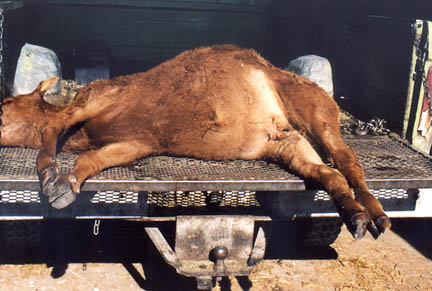
"I was not called in time to see where rancher Mark Taliaferro had found him in the pasture. When I got there, they had loaded the animal into the back of a pickup truck and brought him to the yard. But the steer calf was killed in the general vicinity of the last mutilation they had in 2001." Investigated and photographed by Pondera County Sheriff Tom Kuka.
“I was not called in time to see where rancher Mark Taliaferro had found him in the pasture. When I got there, they had loaded the animal into the back of a pickup truck and brought him to the yard. But the steer calf was killed in the general vicinity of the last mutilation they had in 2001.” Investigated and photographed by Pondera County Sheriff Tom Kuka.

As I was walking up to the truck, it seemed to be a fairly recent death. There wasn’t much rigor set in. The animal was not swollen or changed much from being alive. They must have found it very recently. There weren’t any flies. That seemed odd to me. It was a sunny morning when I got there and it was fairly warm out. There should have been more flies around.

WHAT DID MARK TALIAFERRO AND SARA TELL YOU ABOUT WHEN THEY HAD LAST SEEN THE STEER CALF ALIVE AND HOW LONG THEY THOUGHT IT HAD BEEN DEAD?

The steer calf was with a lot of other ones and I’m not sure they actually saw this one. If you look at one of the photos, he has an I.D. in his ear ‘304.’ If they saw calf 304, they didn’t know when that was. But all the cattle had been in that pasture together and the Taliaferros had put them up pretty recently. That was probably a breeding pasture and they would have been keeping a close watch over them. In fact, the ranchers were fixing fence up there and that’s why they noticed it right away when they saw it was down.

In fact, I think it was the mother of the calf that was causing all sorts of commotion and brought attention to herself and they checked out what she was doing and found the dead calf.

IF IT WERE A WEEK OLD, THE LACK OF FLIES AND THE GOOD PRESERVATION OF THE CALF WOULD BE REMARKABLE. IF IT WAS JUST THE NIGHT BEFORE, THEN THAT WOULD PLACE THE UNUSUAL DEATH BETWEEN JUNE 8 AND JUNE 9, 2005?

My idea when I handled the animal was that it happened the night before the death because there was no rigor, there was nothing. We had that other one at Taliaferros back in 2001 and they seemed to decompose quite a bit by the time we’ve always gotten to them before, where this one had not. So, it had to be relatively fresh. There was no bad odors yet. It was quite fresh.


Circular, Deep Excision of Rectal Tissue – Cauterized?

Circular, deep excision of rectal and internal tissue from Mark Taliaferro's steer calf. Photograph by Pondera County Sheriff Tom Kuka.
Circular, deep excision of rectal and internal tissue from Mark Taliaferro’s steer calf. Photograph by Pondera County Sheriff Tom Kuka.

My photograph of the rectum area of the calf – the hole was shifted somewhat by the way the animal was laying on that tailgate. But to me, it was just an almost perfectly round, surgical cut. It was almost as if it was cauterized. There was no bleeding and didn’t appear to be any disturbance of other tissues ­ just straight in as far as we could see into it.

THE HOLE APPEARS TO HAVE A DARKENED EDGE?

It did. It’s almost as if they were cutting and cauterized it. Is there equipment available to do that?

THAT’S ALWAYS BEEN ONE OF THE CONFUSIONS BECAUSE WHEN DR. JOHN ALTSHULER IN DENVER WAS HELPING ME DO ANALYSIS ON MUTILATED ANIMAL TISSUES, HE WENT TO A GYNECOLOGIST TO GET SLIDES OF KNOWN LASER SURGERY. WHEN WE LOOKED UNDER A MICROSCOPE AND COMPARED THE KNOWN LASER SURGERY TO THE TISSUE I WAS COLLECTING FROM THE FIELD, THIS WAS THE PUZZLE. WE ALWAYS FOUND CARBON RESIDUE IN THE SURGERIES THAT HAD BEEN DONE BY KNOWN LASER EQUIPMENT. BUT IN THE ANIMAL MUTILATIONS, WE NEVER FOUND CARBON RESIDUE. THAT PROVOKED DR. ALTSHULER TO SAY HE DID NOT KNOW WHAT THE CUTTING INSTRUMENT IS.

It looks odd to me. I grew up on a ranch. I’ve seen what happens to these animals after birds of prey, coyotes or whatever else you might have around there. There is never any damage like that. Nothing that those animals do look like this photograph. There would have been way more cutting marks. I think there would have been blood and other tissues destroyed. But there was nothing else touched or damaged. You have to have quite a bit of precision to do that.


Hole Where Castrated Scrotum Had Been.
Was Penis Removed Also?

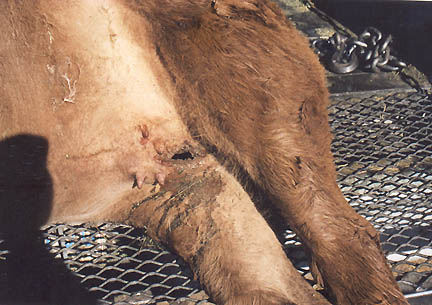
Taliaferros had previously castrated calf, but remaining scrotum tissue - and possibly entire penis tissue inside belly? - were excised at hole near the steer calf's undeveloped teats. Photograph by Pondera County Sheriff Tom Kuka.
Taliaferros had previously castrated calf, but remaining scrotum tissue – and possibly entire penis tissue inside belly? – were excised at hole near the steer calf’s undeveloped teats. Photograph by Pondera County Sheriff Tom Kuka.

Another photo I took is of the groin area of the steer calf. It was rather odd that they chose to make a hole there. Once again, you can see by the way the animal is laying there that the hole was probably more rounded when I was there to look at it, but in the photograph, they had moved the calf. But this animal had been castrated shortly after birth. I think they put a rubber band on the testicles and there would have been nothing there.

Those four small teats, steers still have small, undeveloped teats. They never develop more than what’s in the photo. But the scrotum and testicles were gone and I’m not sure what the mutilators were trying to get there. If the penis was gone, too, I’m not medically inclined enough to go in there and look, I guess. In the photo, I’m casting a shadow on the belly where the penis should have been with my hand. It’s hard to see. If it’s there or not, I wish I could say and studied more.

THE PENIS ITSELF WOULD HAVE EXITED THE CALF FROM WHERE YOUR HAND SHADOW IS, SORT OF NEAR THE MID-BELLY. BUT THE QUESTION IS WHETHER OR NOT THE HOLE WHERE THE UNDEVELOPED TEATS ARE WOULD HAVE BEEN USED TO PULL THE PENIS OUT AND CUT IT OFF?

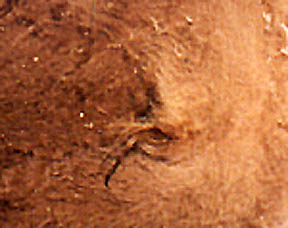
Right, but even the picture of the calf on the tailgate where you can see the whole calf – if you look dead center, you can see where the tuft of hair is around urination hole. But I don’t know if penis was there or not.

 Close-up of hair around urination hole at middle of steer calf's belly. No necropsy done, so not known if penis removed inside abdomen. Photo by Pondera County Sheriff Tom Kuka.
Close-up of hair around urination hole at middle of steer calf’s belly. No necropsy done, so not known if penis removed inside abdomen. Photo by Pondera County Sheriff Tom Kuka.

The way we castrate our calves, we leave that scrotum in place. We have a device that cuts the cord off to the testicles while they are still intact and leaves the scrotum there and eventually, they disintegrate inside there.

But you can feel right above the testicles (going toward mid-belly) where the penis is and you have to be extremely careful not to pinch that with the testicle cord-cutting device or you’ll stop the urination tract and the animal will die. So, it’s very important not to crush there and that’s right where the hole is in the calf in the photograph.


Right Eyeball, Optic Nerve and Bone “Cored Out”

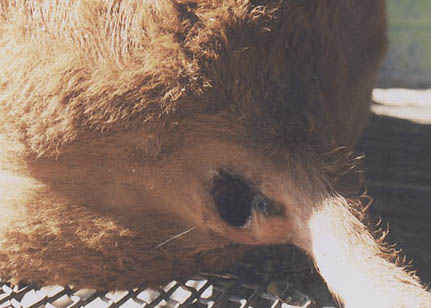
Right eyeball, optic nerve and bone "cored out" of steer calf. Photograph by Pondera County Sheriff Tom Kuka.
Right eyeball, optic nerve and bone “cored out” of steer calf. Photograph by Pondera County Sheriff Tom Kuka.

If you look at the photo that shows the head with the ear tag, 304, on it, that right eye is gone. We also rolled the steer over and out of that empty eye socket poured 8 ccs approximately of blood. That was odd because all the other mutilated animals I’ve worked with never had any blood in the eye sockets. Once again, it was like the same tool was used in the eye. It was precisely, surgically removed, it appeared to me. It was a very round, cylindrical cut straight in – the mutilators would have gotten the eyeball and maybe some of the nerve behind it? Is that a common practice they do?

YES, NECROPSIES ON OTHER MUTILATED ANIMALS HAVE CONFIRMED THE OPTIC NERVE WAS TAKEN AS WELL AS EYEBALL.

I don’t know if you are familiar with a hole saw you would use to drill a hole in a door to put a doorknob in? It was something similar to that. It looked as though an instrument went in, cut, cauterized, and removed this like a core sample from this animal. It apparently caused some bleeding because when we rolled it over, the blood poured out.

ONLY FROM THE EYE.

Only from the eye.

WHEN YOU LOOKED DOWN INSIDE THE EYE SOCKET, IT LOOKED AS IF SOMETHING LIKE A BIOPSY INSTRUMENT HAD PENETRATED INTO THE SOCKET BONE BEHIND THE EYEBALL TISSUE?

Yes, everything was removed. I’ve hunted all my life and had to field dress animals. I’ve cut animals for the meat and steaks. All of these cuts ­ nothing could I do that would duplicate this! When they drilled in there, they cut it off and removed a core and then it did not bleed, or very little. They did it so symmetrically there is no way a human could do it with a knife. You would need pretty precise equipment.

From my own experience, you can’t remove anything like that in that exact size without doing other damage to that head area. The hole went down in there at least 3 inches, if not further. You can’t just stick a knife in there and cut around that hole and remove it that way because you are going to pry on the edge and the eyelid is going to get damaged. It’s physically impossible, at least for me to do it.

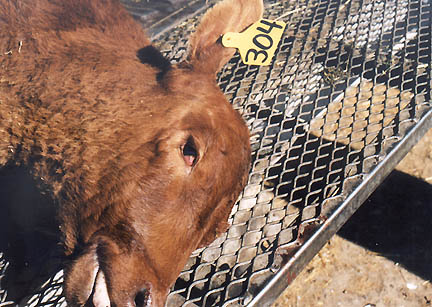
Left side of steer's head totally untouched. Photograph by Pondera County Sheriff Tom Kuka.
Left side of steer’s head totally untouched. Photograph by Pondera County Sheriff Tom Kuka.

The other thing I noticed on this animal was that no hide skin was missing on the head or neck. All the other animals we have investigated always had that missing hide from the jaw ­ I guess it was the left side usually?

IT COULD BE THE LEFT SIDE OR RIGHT SIDE. BUT I AGREE THAT IN THE CLASSIC MUTILATIONS OF THE PAST 50 YEARS, ALMOST ALWAYS SOME OF THE TISSUE IS TAKEN FROM ONE SIDE OF THE JAW, OR BOTH SIDES, OR AROUND THE MUZZLE. BUT IN THIS STEER CALF, THE FACE IS SO CLEAN AND IT APPEARS THAT ONLY THE EYE ON THE RIGHT SIDE HAS BEEN REMOVED, ALONG WITH THE OPTIC NERVE AND BONE GOING INSIDE. BUT THERE IS ALSO THE SEVERED TONGUE.


Tip of Tongue Cut Off At 45 Degree Angle

Tip of steer calf's tongue cut off on 45 degree angle, according to Pondera County Sheriff Tom Kuka, who took this photograph.
Tip of steer calf’s tongue cut off on 45 degree angle, according to Pondera County Sheriff Tom Kuka, who took this photograph.

Yes, the tongue was interesting. It was cut at almost a 45 degree angle across there. Sorry my photo doesn’t show it so clearly. The other mutilations we have seen, the tongues were gone completely deep in the throat. Why did they just take the tip of this one and at that angle? I’m at a loss again.

INSTEAD OF A SHARP INSTRUMENT CUTTING THE TONGUE AT A 45 DEGREE ANGLE, COULD IT HAVE BEEN A MAGPIE?

No, no. I don’t see any reason to believe a natural predator could have done that.


Law Enforcement Theories About Mutilators?

Greeley Tribune, Greeley, Colorado, Sunday, November 2, 1980.

WHEN YOU ARE TOGETHER WITH OTHER DEPUTIES AND SHERIFFS, WHAT DO YOU PRIVATELY TALK ABOUT AS POSSIBLE PERPETRATORS BEHIND THE UNUSUAL ANIMAL DEATHS?

Of course, there is always the idea that it’s aliens. Usually there is a lot of joking about it going on.

DO YOU THINK THERE IS ENOUGH HIGH STRANGENESS TO JUSTIFY THAT AS AN EXPLANATION?

I do, yes. I guess I’m not thoroughly convinced of it, but there has to be some sort of explanation for this. That certainly is possible. Where we are is a fairly sparsely populated area. There could be a lot of things that happen and nobody ever sees it. But where this is going on is right next to these peoples’ houses. There are no obstructions due to trees. A little bit of rolling hills. But if you weren’t flying, you would have to use the roads that go right by the houses. The people would notice. There would be evidence of vehicles. But there is no evidence of that here.

USUALLY RANCHERS HAVE DOGS. ONE OF THE THINGS THAT HAS IMPRESSED ME IS HOW MANY TIMES THERE HAVE BEEN MUTILATIONS FOUND CLOSE TO RANCH HOUSES WHERE THERE WERE DOGS IN THE HOUSE AT NIGHT. BUT THE DOGS DON’T BARK.

Nothing has brought attention in the mutilations here either. In this instance of the steer calf, it was the mother’s crying and agitation that caused the ranchers to pay attention while they were fixing the fence. The biggest thing I want to know is: what could you possibly gain from this? I guess that’s my biggest thing: why is this happening?

WHY HAS IT BEEN HAPPENING FOR SO LONG TOTALLY UNSTOPPED AND THERE HAS NOT BEEN A SINGLE ARREST OR ARRAIGNMENT IN ANY COUNTRY ON THIS PLANET ON A CATTLE MUTILATION CHARGE. THE OTHER SUGGESTION HAS BEEN THAT THE REASON FOR THIS, IF WE ARE DEALING WITH ANOTHER INTELLIGENCE, IS A GENETIC HARVEST. THAT’S WHAT THEY WANT, THE GENETIC MATERIAL OR FOOD.

Why return the animal? Why not take the whole thing?

IT’S AN EXCELLENT QUESTION. I BEGAN ASKING THE SAME THING 26 YEARS AGO AND THE ONLY CONSENSUS AMONG LAW ENFORCEMENT I’VE TALKED TO AND AMONG OTHER RESEARCHERS IS IT’S LIKE A CALLING CARD, A COMMUNICATION, THAT WHATEVER IS DOING THIS IS SAYING, ‘THIS IS WHAT WE CAN DO AND THERE IS NOTHING YOU CAN DO TO STOP IT.’ SO IT’S SORT OF INTIMIDATING.

Very possible. I don’t know.”


More Information:

See other Earthfiles reports about Montana region animal mutilations in Earthfiles Archives.

  • 08/28/2004 — Cow Mutilation and Loud, Unidentified Sound in Farnam, Nebraska
  • 11/16/2002 — More Cat and Cow Mutilations: Colorado, Utah and Missouri
  • 10/15/2002 — Chapter 8 – Mystery Stalks The Prairie
  • 09/22/2002 — Chapter 3 – Mystery Stalks The Prairie
  • 01/18/2002 — Part 2 – Cattle Mutilation Cases from the Pondera County, Montana Sheriff’s Office
  • 01/12/2002 — Part 1 – Update On 2001 Montana Cattle Mutilations

Also, see my books and documentaries about the worldwide animal mutilation mystery in Earthfiles Shop.

Part 1: Anomalies Confirmed in Pennsylvania and Arizona Randomly Downed Crops

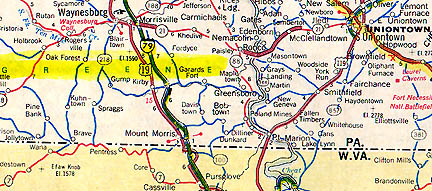
Unusual randomly downed oat crop was reported July 3, 1005, in Greene County, Pennsylvania, west of Uniontown in the far southwestern corner of the state.
 Oats randomly downed in long, linear sections that included complex internal patterns of "checkerboards," multiple layers laid down in 90 degree angles to each other, and oat stems twisted so strongly at the soil level that beige discoloration was scattered throughout. Fire truck ladder photograph © by Greene County resident.
Oats randomly downed in long, linear sections that included complex internal patterns of “checkerboards,” multiple layers laid down in 90 degree angles to each other, and oat stems twisted so strongly at the soil level that beige discoloration was scattered throughout. Fire truck ladder photograph © by Greene County resident.

August 1, 2005 Williamsburg, Ohio – On July 3, 2005, a Greene County, Pennsylvania resident and her husband (who have asked for name and town anonymity) saw oat plants in a field which seemed to be laid down in unusually straight 90 degree angles and sections. The couple contacted the local fire department which sent out a hook and ladder truck to see what the field looked like from 75 feet up. From that altitude, the woman took several photographs and sent one to the Coast to Coast AM radio website asking for more information. Eventually two weeks later, a viewer forwarded the photo and sender’s e-mail to Jeffrey Wilson, Director, of the Independent Crop Circle Researchers’ Association (ICCRA). Jeff contacted the couple by e-mail and she arranged to get permission from the farm owner and to meet Jeff and his ICCRA colleagues Charles Lietzau, Ph.D., Delsey Knoechelman and Roger Sugden at the oat field for investigation on July 22, 2005.Click for report.

EARTHFILES