
Part 1: Martian Water Vapor and Methane Overlap in Equatorial Regions

"A symbiosis of methanogenic bacteria with methanothrophic bacteria in the Martian underground can be an alternative interpretation (to geothermal) and looks more likely."

- Vittorio Formisano, Ph.D.
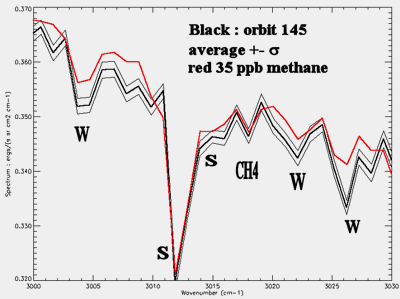
New in-depth analysis of PFS data by European Space Agency confirms that methane is not uniform in the Martian atmosphere, but concentrated in some areas. The PFS team observed that the areas of highest concentration of methane overlap with the areas where NASA identified water vapor and underground water ice are also concentrated. This spatial correlation between water vapor and methane seems to point to a common underground source. Spectra of red-colored atmospheric CH4 methane and other gases, and W water vapor, from European Space Agency (ESA)
New in-depth analysis of PFS data by European Space Agency confirms that methane is not uniform in the Martian atmosphere, but concentrated in some areas. The PFS team observed that the areas of highest concentration of methane overlap with the areas where NASA identified water vapor and underground water ice are also concentrated. This spatial correlation between water vapor and methane seems to point to a common underground source. Spectra of red-colored atmospheric CH4 methane and other gases, and W water vapor, from European Space Agency (ESA).


September 20, 2004  Ischia Island, Italy - Today at the International Mars Conference held September 19-23, by the Italian Space Agency, physicist Vittorio Formisano, Ph.D., presented results from his analysis of the Martian atmosphere in a paper entitled, "Observation of Methane, Formaldehyde and HS (hydrogen sulfide): Extant Life On Mars?" Dr. Formisano designed the Planetary Fourier Spectrometer (PFS) for placement on the European Space Agency's Mars Express Orbiter. Back on May 6, 2004, when I interviewed him for Earthfiles and radio, he said his PFS data indicated molecules of formaldehyde in the Martian atmosphere and told me, "Formaldehyde is destroyed in the Martian atmosphere within 7.5 hours. There is no way that formaldehyde can exist and remain for a long time in the Martian atmosphere. If (formaldehyde) confirmed, possibly life on Mars today, yes."

 

Click here to subscribe and get instant access to read this report.

Click here to check your existing subscription status.

Existing members, login below:

Cat 4 and 5 Hurricanes Charley, Frances and Ivan in Four Weeks – Unprecedented in American Recorded Weather History

A rare view from inside the eye of a hurricane - this was Hurricane Allen on August 7, 1980. At the time this photo was taken, Allen was just entering the Gulf of Mexico through the Yucatan Channel. Scientists aboard a reconnaissance flight into the storm measured a barometric pressure of 26.55 inches (899 mb) and sustained winds of 190 mph. Photo courtesy NOAA Photo Library 1980.
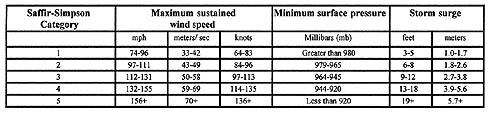
Hurricanes Charley, Frances and Ivan between August 13 to September 14, 2004, have been Category 4 and 5, an unprecedented event in American recorded weather history. The National Hurricane Center says Ivan has had the 6th lowest barometric pressure on record. Hurricane intensity is measured using the Saffir-Simpson Scale, ranging from one (1) (minimal) to five (5) (catastrophic). Cat 3-5 hurricanes have caused over 70% of American natural disaster damage. Source NC Division of Emergency Management Hazard Mitigation Section.

September 14, 2004  Greenbelt, Maryland - In a four-week-period from August 13 to September 16, 2004 - for the first time on record in American weather history - three major Category 3 to 5 hurricanes made landfall in the southeastern United States. Charley intensified to a Category 4 hurricane and made landfall with winds of 145 mph, and gusts that topped 180 mph in Punta Gorda which was devastated along with Port Charlotte on August 13. Charley cut a huge swath of upturned trees, downed power lines, flattened trailer homes, destroyed houses and businesses all across central Florida, including Orlando, and killed at least 27 people.


Click here to subscribe and get instant access to read this report.

Click here to check your existing subscription status.

Existing members, login below:

Near-Earth Asteroid 4179 Toutatis Comes By Again On September 29, 2004

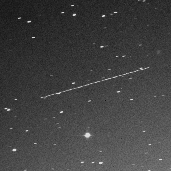
August 27, 2004  Pasadena, California - Internet rumors have circulated this year that in September 2004, an asteroid will strike Earth and cause great devastation. An asteroid is going to pass the Earth's orbit on September 29th, but there astronomers and asteroid specialists say there is no chance for a hit. The Near-Earth-Passing asteroid is called 4179 Toutatis, a very strangely-shaped rock that was first discovered by C. Pollas on January 4, 1989, at Caussols, France, on photographic plates taken on the 0.9-m Schmidt telescope by Alain Maury and Derral Mulholland during astrometric observations of Jupiter's faint satellites. Toutatis is the long streak in the image below.

Asteroid 4179 Toutatis first photographed on January 4, 1989, from Caussols, France telescope.


Click here to subscribe and get instant access to read this report.

Click here to check your existing subscription status.

Existing members, login below:

Part 2: Martian Water Ice and Organic Molecules – NASA Will Look for ‘Unique Signs of Life’ on Mars

"Is the overlap of methane and water on Mars evidence of geothermal activity on Mars? Or is it evidence of biology? That's the question which we all want to answer."

- Michael J. Mumma, NASA Astrophysicist

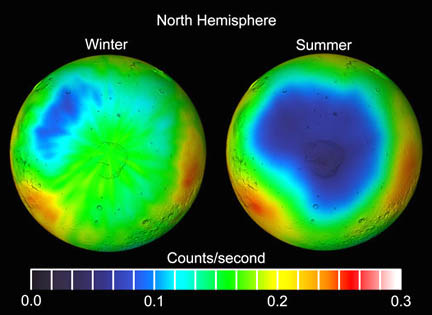
September 21, 2004  Greenbelt, Maryland - NASA scientists began searching for methane on Mars in 1989. By 2002, the NASA infrared facility in Hawaii with its high resolution spectroscopy began to detect methane. In 2003, the Mars Odyssey's neutron and gamma-ray sensors had tracked seasonal changes of carbon dioxide "dry ice" and water ice. As the dry ice dissipated with the seasonal changes in temperatures, water ice was confirmed to be 90% by volume in some places in the Northern Hemisphere.


Click here to subscribe and get instant access to read this report.

Click here to check your existing subscription status.

Existing members, login below:

NASA Has Launched Aura Satellite to Study Ozone-Destroying Chemicals in Atmosphere

"If we don't understand what we're doing to our home planet, we may drive ourselves all into extinction."

- Mike Tanner, NASA Scientist, Aura Satellite

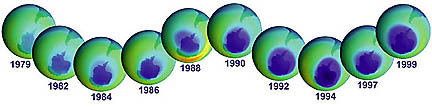
Total Ozone Mapping Spectrometer (TOMS) data from 1979 to 1999 shows the growth of the ozone hole over Antarctica over twenty years. Images provided by NASA.


August 16, 2004  Cape Canaveral, Florida - As the ozone holes over the North and South polar regions have enlarged every year since monitoring began in 1979, the U. S. government and scientists agree it is important to study the Earth's atmospheric chemistry more closely. After several delays, NASA finally launched an environmental research satellite called "Aura" (Latin for "air" or "breath") on Sunday, August 15, 2004, from Vandenberg AFB in California.


Click here to subscribe and get instant access to read this report.

Click here to check your existing subscription status.

Existing members, login below:

Is Physicist Vittorio Formisano’s Mars Data Being Suppressed by ESA?

"Speculation is that already methane is a rather strong indicator life is probably present today on Mars. ...Formaldehyde (also detected?) is destroyed in the Martian atmosphere within 7.5 hours. There is no way that formaldehyde can exist and remain for a long time in the Martian atmosphere. If (formaldehyde) confirmed (in addition to the confirmed methane, possibly life on Mars today, yes."
- Vittorio Formisano, Ph.D., Physicist , May 6, 2004

July 22, 2004 - Today I  was scheduled to interview physicist Vittorio Formisano at the COSPAR (Committee On Space Research) meeting in Paris where he was scheduled to hold a press conference to announce the final results of his Planetary Fourier Spectrometer mounted on the European Space Agency's (ESA) Mars Express Orbiter.Vittorio Formisano, Ph.D., is the Principal Investigator of the Planetary Fourier Spectrometer (PFS) which he built and designed to detect methane and other gaseous molecules. Dr. Formisano is based at the Institute of Physics and Interplanetary Science in Rome, Italy, and has been commuting to ESA offices in Darmstadt, Germany, to gather more data from the Planetary Fourier Spectrometer in hopes that he can confirm the location of one or more sources of the Martian methane, as well as molecular indications of formaldehyde, benzene and ammonia. The presence of those molecules in the Martian atmosphere, would most likely mean a life process of some kind, he told me in my previous May 6, 2004, interview with him while he was working in his Rome office. See: 05-06-04 Earthfiles.


Click here to subscribe and get instant access to read this report.

Click here to check your existing subscription status.

Existing members, login below:

Wild 2, An Amazing Comet

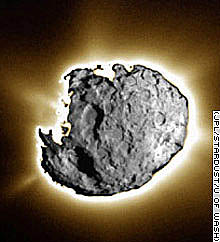
NASA/JPL reports about January 2, 2004, flyby from 174 miles (236 kilometers): "A composite image of comet Wild-2 shows part of its surface detail overlain on a longer-exposure image that reveals the outgassing jets. Dust and gas stream into space, leaving a trail millions of miles long." Composite image courtesy JPL Stardust and University of Washington.

June 25, 2004 Seattle, Washington - The June 18th issue of the journal Science featured on its cover a comet called "Wild 2." (Pronounced Vilt Two) This comet first showed up in human telescopes in 1974 when its orbit changed from far out at the edge of the solar system to one bobbing around the sun between Mars and Jupiter. Since 1974, Wild 2 has been coming around every six years and NASA and the Jet Propulsion Lab in Pasadena decided it might be a good comet to fly by and sample dust coming off its surface in a search for not only the primordial elements that made our solar system, but for even older "stardust" residues from the bigger universe.


Click here to subscribe and get instant access to read this report.

Click here to check your existing subscription status.

Existing members, login below:

German Scientist Werner von Braun Anticipated Terrorists, Asteroids and ETs on American “Enemy’s List”

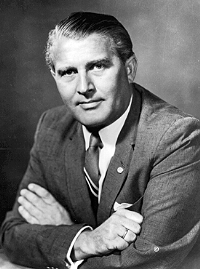
Werner Von Braun, Ph.D., rocket physicist from Germany who lead American space development after WWII.

 June 18, 2004  Ventura, California - One of the most famous names from the beginning of the American rocket and missile programs after World War II is Wernher von Braun. With the defeat of Germany and Japan in 1945 after the United States dropped the atomic bombs on Hiroshima and Nagasaki, Dr. von Braun and 126 other German rocket scientists were brought to the United States under a government project called "Paperclip." They were based at Fort Bliss, Texas and their work was focused at the White Sands Missile Range north of Ft. Bliss in southern New Mexico.


Click here to subscribe and get instant access to read this report.

Click here to check your existing subscription status.

Existing members, login below:

Cassini Spacecraft Will Rendezvous with Saturn July 1, 2004

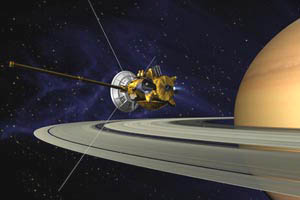
Cassini's four year tour of Saturn, its rings, moons and magnetosphere will begin on July 1, 2004. Artist's conception of Cassini, a plutonium-powered spacecraft carrying 12 science instruments and a probe, in orbit around Saturn. Image credit: NASA/JPL.

June 11, 2004  Pasadena, California - Three weeks from now on July 1, 2004, humanity's first spacecraft designed to reach and orbit the rings of Saturn will approach from below the ring plane. Cassini, using small jets to control its flight, will cross through the large gap between the very thin outer F Ring and G Ring.


Click here to subscribe and get instant access to read this report.

Click here to check your existing subscription status.

Existing members, login below:

Mayan Priest in Guatemala Writes About Rare Venus Transit

"The apparent Path of Venus over the face of the Father Sun (an ecliptic transit in relation to the Sun) has announced (in the past) drastic changes in the Earth, from cataclysms, wars, destruction (lack of food, plagues) to historical changes regarding the evolutionary development of both human beings and the Mother Earth (a destiny that is connected although not intertwined)."

- Carlos Barrios, Mayan Priest, May 2004

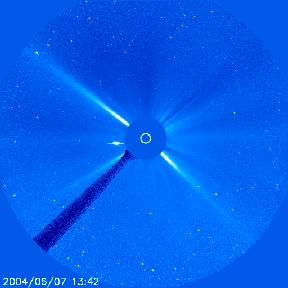
June 7, 2004, image of Venus as white dot moving toward sun as it nears June 8, 2004, solar transit. Image courtesy Solar and Heliospheric Observatory (SOHO).

 
June 7, 2004  Antigua, Guatemala - About half the people on Earth might be able to see Venus move as a small black dot across the disc of the sun on June 8, 2004. It takes about six hours and you need a sun filter to protect your eyes. Astronomers have seen the rare event only five times before in the 18th and 19th centuries. For U.S. East Coast observers, the transit is underway at sunrise and ends around 7:25 a.m. EDT. The starting and ending times are listed for major cities at http://aa.usno.navy.mil/data/docs/Venus2004.pdf.


Click here to subscribe and get instant access to read this report.

Click here to check your existing subscription status.

Existing members, login below:

EARTHFILES